
Slavic Names for Girls

By ScarlettRobin
Updated Thu May 25 2023
Share
Copy link
- Mira
Origin:
Latin, Slavic, Arabic, Sanskrit, JapaneseMeaning:
"admirable; peace; female ruler; ocean; mirror"Description:
A truly international choice, the sweet and simple Mira has its origins in Sanskrit, Latin, Slavic, and Arabic, just to name a view. With its arty aura and succinct look, it makes a versatile option, much like the similar Nina and Mina.
- Vera
Origin:
RussianMeaning:
"faith"Description:
Vera was the height of fashion in 1910, then was for a long time difficult to picture embroidered on a baby blanket. Now, though, it has come back into style along with other old-fashioned simple names such as Ada and Iris.
- Mila
Origin:
Slavic, RussianMeaning:
"gracious; dear"Description:
Mila is a popular name that took a 125 year nap, ranking in the Top 1000 in 1881 and then not ranking again until 2006, after actress Mila Kunis appeared on That 70s Show.
- Nadia
Origin:
Russian, ArabicMeaning:
"hope; tender, delicate"Description:
Nadia, an accessible Slavic favorite, has a strong run of popularity in the US in the early 2000s, partially thanks to the character on Lost called Nadia but actually named Noor, but it's since slumped down the rankings. An earlier inspiration was Romanian gymnast Nadia Comaneci, who won the 1976 Olympics.
- Kira
Origin:
Russian feminine variation of CyrusMeaning:
"throne"Description:
Though such cognates of Kira as Keira, Kyra, and Ciara are increasingly popular throughout Europe and in the U.S., this Cyrus relative has a different root. As with all the many variations of this appealing name, there is often confusion around spelling and pronunciation -- does the first syllable rhyme with ear or eye?
- Zora
Origin:
Serbo-CroatianMeaning:
"dawn"Description:
Zora is a meaningful literary heroine name honoring Zora Neale Hurston, an important black writer and leader of the Harlem Renaissance.
- Dana
Origin:
English, Slavic, Persian, ArabicMeaning:
"from Denmark, gift, or wise"Description:
This name found in both Celtic and Scandinavian mythology has gone from all-boy to almost all-girl, retaining a strong, unisex quality. However, it has dropped following its three-decade heyday from the 1960s to the 1990s.
- Audra
Origin:
English, LithuanianMeaning:
"noble strength; storm"Description:
Used primarily in Scotland, and represented here by singer Audra McDonald, the girls' name Audra has been overshadowed by the return of the classic Audrey. Audra may be to Audrey what Jenna is to Jennifer and Jessa is to Jessica: A variation that will rise as the original falls from favor.
Alternatively, however, Audra is a separate Lithuanian name, derived from the Lithuanian word for "storm". In this case, it would be pronounced OW-dru (OW to rhyme with cow, -u like the sound in up) and is used as a feminine form of Audrius.
- Kalina
Origin:
PolishMeaning:
"viburnum"Description:
Kalina, known as a girls' name throughout Eastern Europe, translates literally to viburnum in Polish, making it a botanical name. Viburnum is a flowering shrub. Some sources translate this name as simply "flower." Variations may include Kaline, Kalena, and Kalene.
- Sonja
Origin:
Russian, Slavic, and Scandinavian form of Sophia, GreekMeaning:
"wisdom"Description:
Popular throughout Northern and Eastern Europe, particularly in countries like Sweden, Norway, Russia, and Germany, Sonja has a rich cultural heritage. The name gained international recognition through figures like Sonja Henie, the Norwegian Olympic figure skating champion.
- Olga
Origin:
Slavic variation of Helga, NorseMeaning:
"holy"Description:
This Slavic form of the Norse name Helga is a classic in many Slavic countries, including Russia and Poland, where it currently ranks within the Top 100 girl names. It has historically ranked among the most popular names in countries including Ukraine, Latvia, Spain, France, Serbia, Greece, the US, and many more. Olga is a common name even in Scandinavian countries, such as Sweden and Norway, despite Helga being a more traditional choice. Olha is the uniquely Ukrainian variation.
- Ziva
Origin:
HebrewMeaning:
"life"Description:
A zippy little international name. The Hebrew name relates to the month of Israeli independence, while the Slavic Ziva (also spelled Živa and Siva) is a goddess of love, life and fertility.
- Mariska
Origin:
Hungarian and Dutch diminutive of MariaMeaning:
"drop of the sea, bitter, or beloved"Description:
Robust and energetic with an even blend of spikiness and elegance, Mariska is a diminutive of Maria, notably used in Hungary and The Netherlands. Internationally, it was brought into the spotlight by Law & Order actress, Mariska Hargitay.
- Ludmila
Origin:
SlavicMeaning:
"beloved of the people"Description:
This Slavic classic name might begin to make its mark with American parents, what with the growing popularity of the short form Mila. Borne by a tenth century saint who had been a princess from Bohemia, Ludmila is widely used in Russia, Ukraine and Bulgaria.
- Valeska
Origin:
GermanMeaning:
"strong"Description:
This diminutive of Valeria has a strong and striking sound to match its meaning. It has also been used in Brazil in recent decades.
- Marta
Origin:
Italian, Spanish, Scandinavian, SlavicMeaning:
"lady"Description:
Sharper and steelier than Martha, but with the same underused vintage appeal.
- Olya
Origin:
Russian variation of OlgaMeaning:
"hearty, holy"Description:
Makes the intriguing Olga even more so.
- Eliska
Origin:
Czech from Hebrew, pet form of ElishevaMeaning:
"pledged to God"Description:
Eliška is warm and friendly, in the Misha, Sasha mode.
- Nikola
Description:
Nikola is a feminine name in Slavic countries, though it serves as the masculine form of Nicholas in several Eastern European languages. Derived from the Greek 'Nikolaos' meaning 'victory of the people,' this name combines 'nike' (victory) and 'laos' (people). While predominantly masculine in countries like Serbia, Croatia, and Bulgaria, Nikola has gained popularity as a feminine name in some regions. The name carries associations with strength and triumph while offering the friendly nicknames Niki or Niko. Its international recognition connects to notable figures like scientist Nikola Tesla. The name's cross-cultural nature allows it to travel well across borders while maintaining its distinctive Slavic character. With its strong consonants balanced by ending vowels, Nikola projects both strength and elegance as a feminine choice.
- Maja
Origin:
German, Slovene, and Scandinavian form of Maya; also, ArabicMeaning:
"splendid"Description:
Whether you pronounce it my-a, ma-zha or ma-ha, Maja is an intriguing choice. Sometimes associated with Goya's famous painting "The Naked Maja." As a cognate of Maya, it's a Top 10 name in Slovenia and Sweden and is also popular in Germany and Norway.
The Nameberry App Is Live
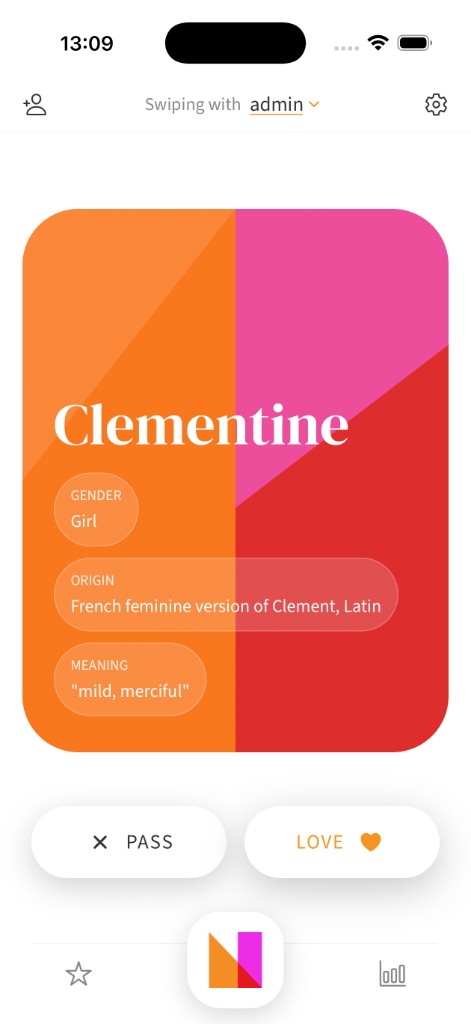
Find your perfect baby name together in our iPhone app, now available on the App Store.
- Swipe through thousands of names with your partner
- Names you match on are saved to your shared list
- Get personalized recommendations that learn based on your and your partner's preferences
- Partner with friends and family to find names you all love
- Backed by Nameberry's 20 years of data around name preferences.