
Girls I Find Intriguing

By Danni
Updated Mon Nov 08 2021
Share
Copy link
- Esme
Origin:
FrenchMeaning:
"beloved"Description:
Esmé comes from the past participle of the Old French verb esmer, meaing "to esteem" or "to love." It can also be considered a derivative of the Spanish name Esmeralda, which means "emerald".
- Daphne
Origin:
GreekMeaning:
"laurel tree, bay tree"Description:
In Greek mythology, Daphne was the nymph daughter of Peneus, a river god. Peneus saved Daphne from Apollo’s romantic obsessions by transforming her into a laurel tree. It is from this myth that the plant genus daphne, which contains the laurel species, gets its name.
- Isla
Origin:
Scottish place-name or SpanishMeaning:
"island"Description:
Isla is a hit name throughout the English-speaking world but hasn't found the same popularity in other western countries, perhaps because its spelling and pronunciation don't make sense for those whose native language is not English. Think island without the final two letters.
- Freya
Origin:
NorseMeaning:
"a noble woman"Description:
Freya has long been popular in the U.K. but has only taken off in the US in the last decade, along with the entire category of mythological names. Derived from the Old Norse name Freyja, meaning "Lady, noble woman", Freya is the name of the Norse goddess of love, beauty, and fertility.
- Violet
Origin:
English from LatinMeaning:
"purple"Description:
Violet is soft and sweet, yet with a vivacious edge. Today, Violet is the top flower name for girls, outranking Lily and Iris in the Top 100, and the second most popular color name for girls after Scarlett.
- Hazel
Origin:
EnglishMeaning:
"the hazelnut tree"Description:
Hazel has a pleasantly hazy, brownish-green-eyed, old-fashioned image that more and more parents are choosing to share. Former Old Lady name Hazel reentered the popularity lists in 1998 and now is near the top of the charts.
- Tessa
Origin:
Diminutive of TheresaMeaning:
"to reap, to gather"Description:
Tessa is one of those golden names that's been popular but not TOO popular for several decades now. Tessa has ranked in the Top 500 in the US since 1981 but has risen only once above Number 200.
- Ruby
Origin:
LatinMeaning:
"deep red precious stone"Description:
Vibrant, sassy, and bubbly, Ruby is a vintage gem that hasn't lost any of its sparkle. Currently popular in a number of English-speaking countries, Ruby is proof of the 100 Year Rule, trending again for the first time since its heyday in the 1910s.
- Ottilie
Origin:
German, FrenchMeaning:
"prosperous in battle"Description:
Ottilie is trending in the UK, where the pronounced T helps the name sound pretty and delicate, rather like Amelie and Elodie. Ottilie is less popular in the US, where many Americans pronounce it as a near-homonym for "oddly".
- Matilda
Origin:
GermanMeaning:
"battle-mighty"Description:
Matilda is a sweet vintage name that has been gently climbing the popularity list for the past 15 years, after a half-century slumber. The spunky children's book heroine Matilda is one factor in its rise, along with others of its class like Eloise and Caspian.
- Odette
Origin:
French, from GermanMeaning:
"wealthy"Description:
Odette is the good swan in Tchaikovsky's ballet Swan Lake, a role for which Natalie Portman won an Oscar ---and it would make a particularly soigne, sophisticated yet upbeat choice, unlike some of the more dated other 'ette'-ending names.
- Aurora
Origin:
LatinMeaning:
"dawn"Description:
The goddess name Aurora has consistently been on the US popularity list since the nineteenth century, but has really taken off in the past 30 years. Aurora also enjoys remarkable international popularity, ranking in the Top 100 throughout the English-speaking world as well as in Italy, Spain, Norway, Switzerland, and several other European and Latin American countries.
- Vera
Origin:
RussianMeaning:
"faith"Description:
Vera was the height of fashion in 1910, then was for a long time difficult to picture embroidered on a baby blanket. Now, though, it has come back into style along with other old-fashioned simple names such as Ada and Iris.
- Estelle
Origin:
FrenchMeaning:
"star"Description:
Maybe it's because she shares that winning -elle sound with Isabel and Bella, but Estelle is no longer seen as a muumuu-wearing canasta player of a certain age (think George Costanza's mother on Seinfeld or Joey Tribbiani's talent agent in Friends). This could be in part thanks to the young Royal Couple of Sweden, who chose it for their firstborn daughter, or the single-named British R&B singer. It reentered the US Top 1000 in 2012 after a nearly fifty-year absence.
- Edith
Origin:
EnglishMeaning:
"prosperous in war"Description:
Edith was a hugely popular name a hundred years ago that's being revived among stylish parents in Stockholm and London. It's currently beginning to gain traction in the US among those with a taste for old-fashioned names with a soft but strong image.
- Rose
Origin:
LatinMeaning:
"rose, a flower"Description:
Rose is derived from the Latin rosa, which referred to the flower. There is also evidence to suggest it was a Norman variation of the Germanic name Hrodohaidis, meaning "famous type," and also Hros, "horse". In Old English it was translated as Roese and Rohese.
- Luna
Origin:
LatinMeaning:
"moon"Description:
The name of the Roman goddess of the moon, Luna is derived straight from the Latin word for moon, luna. Luna may be the name most likely to surprise someone from an older generation by its Top 10 status in the US and its widespread international popularity.
- Anya
Origin:
Russian diminutive of AnnaMeaning:
"grace"Description:
Anya is a Russian variation of Anna, which came from the Hebrew name Hannah. Anya is the form found most frequently in Russia, Poland, and other East European countries, while Anja is the spelling usually preferred in Germany Norway, Denmark, Germany, Sweden, and The Netherlands. In the Hungarian language, Anya also means mother.
- Briar
Origin:
EnglishMeaning:
"a thorny patch"Description:
Fairy-tale memories of Sleeping Beauty inspire some parents—such as Rachel Bilson and Hayden Christensen—to call their daughters Briar Rose. But Briar plus a different middle name might work even better. It's one of the newly popular nature-word names, charting in the US for the first time in 2015 for both genders.
- Heidi
Origin:
Diminutive of Adelheid; GermanMeaning:
"noble, nobility"Description:
Heidi became known — and popular — via the 1880 eponymous children's classic by Swiss writer Johanna Spyri and, despite decades of American Heidis of all sizes, shapes, and personalities, the name seems permanently tethered to that spunky little girl on the Alpine mountaintop in the book and Shirley Temple movie.
The Nameberry App Is Live
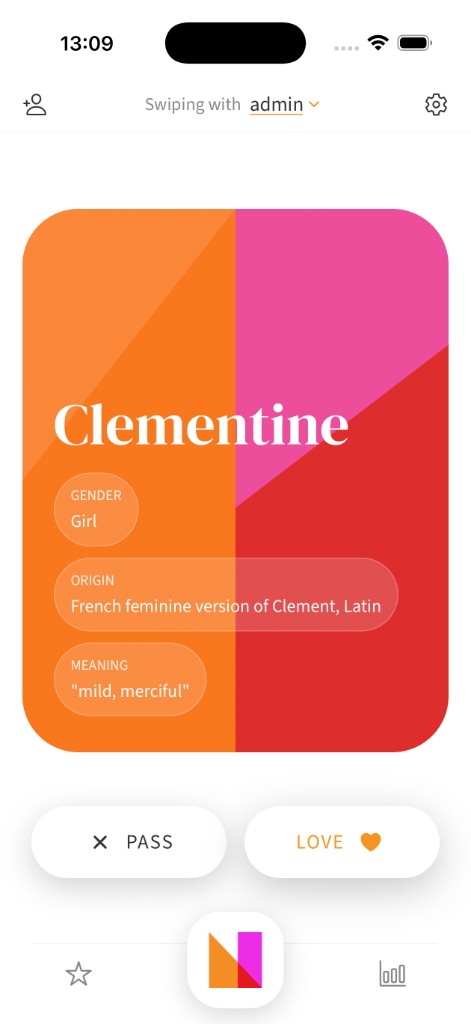
Find your perfect baby name together in our iPhone app, now available on the App Store.
- Swipe through thousands of names with your partner
- Names you match on are saved to your shared list
- Get personalized recommendations that learn based on your and your partner's preferences
- Partner with friends and family to find names you all love
- Backed by Nameberry's 20 years of data around name preferences.