
Flower Names for Girls (with Meanings & Popularity)
- Rosella
Description:
Rosella can be seen as a nature name (a rosella is the name of a variety of beautiful Australian cockatoos and an Australian flower) or a diminutive version of Rose.
- Florine
Origin:
FrenchDescription:
This rare and archaic French name is a little too close to Chlorine for our liking. Despite its flowery origins, Florine has a warrior history - Florine of Burgundy was a female French crusader, who fought in battles alongside her husband and died after continuing to fight with seven arrows in her chest.
- Thylane
Origin:
French, VietnameseMeaning:
"wild orchid"Description:
A French-ified smoosh of Vietnamese Thuy and Lan, borne by French model Thylane Blondeau.
- Tigerlily
Origin:
English flower nameDescription:
This name of the bright orange flower found in Asia has been used occasionally in English-speaking countries. A notable namesake is Tiger Lily, the Native American princess from Peter Pan. Read more about Tiger Lily and other Disney Princess Names in our featured blog.
- Rosamel
Origin:
French and SpanishMeaning:
"rose and honey"Description:
A French surname turned Spanish masculine given name, Rosamel likely derives from the combination of rose + Greek mel "honey".
- Rhoda
Origin:
GreekMeaning:
"rose"Description:
To those who remember, Rhoda is still reminiscent of the brassy Bronx 1970s sitcom Rhoda Morgenstern. But Rhoda has a much longer history--it is a name that can be found in the New Testament as a servant girl in the house of Mary, mother of John. Later, Rhoda appeared in the novel Vanity Fair and the Shaw play Man and Superman.
- Gardenia
Origin:
Flower name, from English surnameMeaning:
"Garden's flower"Description:
More uncommon and powerful than garden varieties like Rose and Lily. Named for Scottish botanist Dr Alexander Garden.
- Amaranth
Origin:
botanical nameDescription:
Amaranth is a beautiful herb with bright fuchsia flowers and a tasty seed that flavors many Eastern dishes. The name is filled with potential for the more adventurous namer, with nickname potential (Ammy, Mara) and a fresh sound that still fits in with all the Amelias and Ambers in the playground.
- Aletris
Origin:
Flower name, from GreekMeaning:
"corn grinder"Description:
The bell-shaped flower Aletris is also known as Colic Root, Blazing Star, Unicorn Root, and Stargrass. Its roots have medicinal properties and are used to aid digestive and muscle problems. Its name derives from Greek aletris — an enslaved woman who ground corn — because of the mealy texture of the flowers.
- Yasmin
Origin:
PersianMeaning:
"jasmine flower"Description:
This name, whose sweet and fragrant floral essence has always been widespread across the Near Eastern world, has now landed on US popularity lists in a variety of spellings. It's been dropping precipitously over the past few years, though, perhaps due to a combination of tensions in the Middle East and the fading fashion status of Jasmine itself.
- Lilliana
Origin:
Variation of Lillian or LilianaMeaning:
"lily, a flower"Description:
While Lillian is the English version of this elaborated flower name and Liliana is the authentic Spanish and Portuguese spelling, Lilliana is a familiar and perfectly usable option in the US.
- Florentina
Origin:
LatinMeaning:
"blooming"Description:
The Latin names for girls Florentina may be the most feminissima and flowery of the 'Flor" names. Another option would be Fiorentina, though you can also downshift to Flora or Florence.
- Nasrin
Origin:
PersianMeaning:
"wild rose"Description:
Nasrin has a strong sound and lovely floral meaning. International variants include the Turkish Nesrin and Egyptian Nesreen.
- Rosanna
Origin:
Combination of Rose and AnnaDescription:
Rose lovers today would probably prefer Rosemary, Rosamund, or even Rose itself, all more stylish variations of the name. Some may associate this form of the name with actress Rosanna Arquette and your mom may think of SNL's Rosanne Rosanna-Danna, though that reference is lost on millennials.
- Mignon
Origin:
FrenchMeaning:
"delicate, dainty"Description:
Charming French endearment, first used as a name by Goethe, that now makes an appealing choice -- though the proper feminine form is Mignonne. Note, though, that this is not actually used as a name in France, where Manon would be the closest choice.
- Suzette
Origin:
French diminutive of Susannah, HebrewMeaning:
"lily"Description:
Suzette has a kind of clunky retro charm – so kitsch it's almost cool again.
- Ornella
Origin:
ItalianMeaning:
"flowering ash tree"Description:
Like many a popular name, Ornella is a theatrical creation. Italian playwright Gabriele d'Annunzio created this name for his dramatic heroine in the 1904 play La Figlia di Iorio. Ornella is a feminization of the orno or ornello, which is the Italian word for the Fraxinus Ornus, a type of tree which produces such sweet sap that it was compared to biblical manna.
- Zaynab
Origin:
Tree name or Arabic,"beauty, grace"Meaning:
"beauty, grace"Description:
Zaynab, from the Arabic word for beauty and the name of a flowering tree, was the name of a granddaughter, daughter and two wives of the Prophet Muhammed. Related names include the simplified forms Zaina and Zayna and the Swahili-inflected Zainabu, along with possibly Zenobia, a name related to the Greek mythological god Zeus. Zaynab is one of the most popular Muslim girls' names around the world.
- Amapola
Origin:
SpanishMeaning:
"poppy"Description:
A rarely heard flower name, Amapola comes from the Spanish word for "poppy", in turn associating with name with remembrance and the months of August and November. Pronounced as a-ma-POH-la, with the emphasis on the third syllable, it may feel similar enough to Amalia, Amaia, and Paula to work.
- Celandine
Origin:
English botanical nameDescription:
A botanical name belonging to a small yellow flower in the poppy family. The word ultimately derives from chelidon, the Ancient Greek for "swallow (bird)".
The Nameberry App Is Live
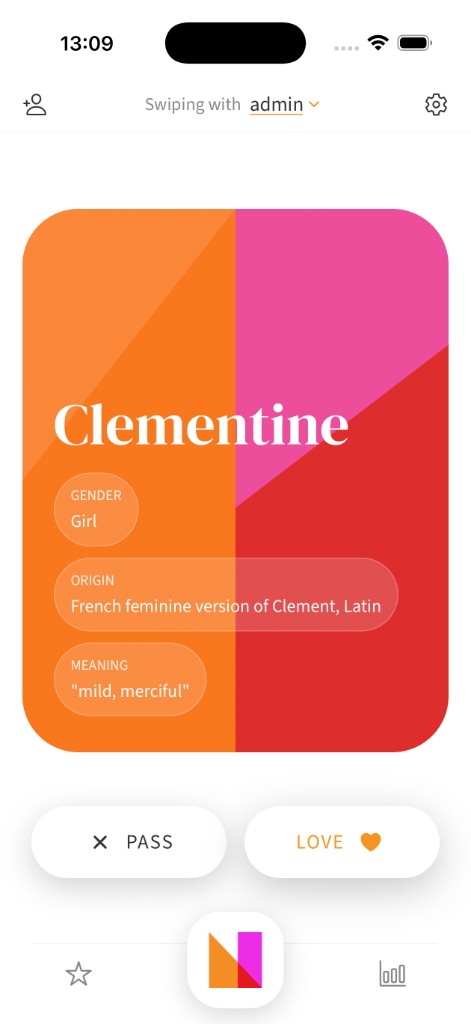
Find your perfect baby name together in our app, now available on the App Store and Google Play.
- Swipe through thousands of names with your partner
- Names you match on are saved to your shared list
- Get personalized recommendations that learn based on your and your partner's preferences
- Partner with friends and family to find names you all love
- Backed by Nameberry's 20 years of data around name preferences.