
Doberman Names


Doberman names are fitting for this beautiful, intelligent, and large dog breed. Originating in Germany, the Doberman is one of the most popular pets in the US.
The most popular names for Dobermans are Luna and Max, which are also the most popular names for dogs overall in 2026. Many of the top names for Dobermans reflect overall dog name trends, but there are a few standout categories of names that are disproportionately popular for Dobermans compared to other breeds.
Being a German dog breed, it is fitting that several German names are extra popular for Dobermans, including Bruno, Otto, Klaus, Heidi, and Zelda. Some unique German names that would be fitting include Lotte, Mitzi, Wilma, and Greta for female Dobermans and Leopold, Keller, Fritz, and Timo for male Dobermans.
Badass dog names are also common for Dobermans, including Leia, Zelda, Arya, and Venus for female dogs, and Apollo, Vader, Titan, and Rambo for male dogs. Unique badass dog names include Astrid, Nyx, Raven, and Artemis, or Ajax, Hendrix, Draco, and Legend.
Here is our extensive roster of names for Dobermans, ordered by their current popularity on Nameberry.
RELATED:
- Cassian
Origin:
Latin, variation of CassiusMeaning:
"hollow"Description:
Rugged but gentle at the same time, Cassian is a saintly and stylish choice that was derived from the name Cassius. Before 2017, it was an obscure choice, given to a tiny handful of boys each year. As of 2023, however, it's become one of the top ten fastest-rising names in the US, more than doubling in usage since 2022 and edging closer towards the Top 500.
- Leopold
Origin:
GermanMeaning:
"brave people"Description:
An aristocratic and stately Germanic route to the popular Leo, Leopold is a royal name: Queen Victoria used it to honor a favorite uncle, King Leopold I of Belgium. These days, this royal tie may be seen as a drawback to the name, owing to the cruelty of King Leopold II's rule over the Congo, though it remains popular in Austria, Poland, and France (as Léopold).
- Daphne
Origin:
GreekMeaning:
"laurel tree, bay tree"Description:
In Greek mythology, Daphne was the nymph daughter of Peneus, a river god. Peneus saved Daphne from Apollo’s romantic obsessions by transforming her into a laurel tree. It is from this myth that the plant genus daphne, which contains the laurel species, gets its name.
- Freya
Origin:
NorseMeaning:
"a noble woman"Description:
Freya has long been popular in the U.K. but has only taken off in the US in the last decade, along with the entire category of mythological names. Derived from the Old Norse name Freyja, meaning "Lady, noble woman", Freya is the name of the Norse goddess of love, beauty, and fertility.
- Lucy
Origin:
English variation of Lucia, LatinMeaning:
"light"Description:
A versatile classic, Lucy is both sweet and solid, a saint's name, and the heroine of several great novels. First fashionable in England and Wales, Lucy is now a popular choice in the US, The Netherlands, and New Zealand.
- Riley
Origin:
English, IrishMeaning:
"rye clearing; courageous"Description:
Riley—an upbeat, friendly surname name—is red hot for girls and still going strong for boys. If you haven't been spending much time around babies recently, you may be surprised to learn that Riley is the most popular girls' name starting with R and also the Number 1 Irish name for girls in the US.
- Iris
Origin:
Flower name; GreekMeaning:
"rainbow"Description:
Iris has so much going for it. It's a fashionable flower name. It's a mythological name, from the Greek goddess of the rainbow. And it's a classic name, always ranking in the girls' Top 1000 but now at its highest point ever.
- Ava
Origin:
Hebrew, Latin or GermanicMeaning:
"life; bird; water, island"Description:
Ava is one of the prime examples of a modern classic name, ranking in the Top 10 for 20 years, from 2005 through 2024, only falling out in 2025.
- Alice
Origin:
GermanMeaning:
"noble"Description:
Alice is a classic literary name that's both strong and sweet, ranking in the US Top 100 and popular throughout the Western world. Alice is derived from the Old French name Aalis, a diminutive of Adelais that itself came from the Germanic name Adalhaidis, which is composed of the Proto-Germanic elements aþala, meaning "noble," and haidu, "kind, appearance, type."
- Margot
Origin:
French, diminutive of MargaretMeaning:
"pearl"Description:
Margot is suddenly a star again. After a nearly-half century absence, it hopped back on the Top 1000 list in 2013 and is on the rise. The Margot spelling is now given to three times as many baby girls as the Margo one.
- Cora
Origin:
GreekMeaning:
"maiden"Description:
Cora is a lovely, old-fashioned girls' that has been recently rejuvenated by its contemporary-feeling simplicity. In fact, Cora seemed headed straight for the top of the popularity list when the coronavirus pandemic somewhat weakened its appeal.
- Stella
Origin:
LatinMeaning:
"star"Description:
Stella is a name with star quality and sparkle, that manages to sound both ethereal and earthy. Celestial but not otherworldly, it lands somewhere between the popular Ella and bold Seraphina.
- Grace
Origin:
English, virtue nameDescription:
Grace, a simple and pure virtue name which originally referred to divine grace, is a fashionable classic. In the early 2000s, it seemed headed for the Top 10 but pulled back from the upward trajectory, which you may consider a very good thing.
- Otto
Origin:
GermanMeaning:
"wealthy"Description:
Otto is cool again. Long a quintessential Old Man Name, Otto has been promoted to trending darling of adventurous baby namers.
- Genevieve
Origin:
English from FrenchMeaning:
"tribe woman"Description:
Genevieve is derived from the Germanic medieval name Genovefa, or Kenowefa, which consists of the elements kuni, meaning "kin", and wefa, meaning "woman." The medieval saint Genevieve, patroness of Paris, defended the city against Attila the Hun through her rational thinking, courage and prayer.
- Cyrus
Origin:
PersianMeaning:
"sun"Description:
Cyrus is one of those surprising names that have always ranked among the Top 1000 boy names in the US. On an upward trend since the mid-90s, Cyrus now sits in that comfortable place between too popular and too unusual.
- Ruby
Origin:
LatinMeaning:
"deep red precious stone"Description:
Vibrant, sassy, and bubbly, Ruby is a vintage gem that hasn't lost any of its sparkle. Currently popular in a number of English-speaking countries, Ruby is proof of the 100 Year Rule, trending again for the first time since its heyday in the 1910s.
- Sylvie
Origin:
French variation of Latin SylviaMeaning:
"from the forest"Description:
Although Sylvia seems to be having somewhat of a revival among trendsetting baby namers, we'd still opt for the even gentler and more unusual Sylvie. Despite being dated in its native France (where it was popular during the 1950s and 60s), in English-speaking regions it still feels fresh and international without being unfamiliar and has a cosmopolitan, international air. It debuted on the US Top 1000 in 2016.
- Thea
Origin:
GreekMeaning:
"goddess, godly"Description:
Thea is a diminutive of names ending in -thea, including Dorothea, Althea, and Anthea. It is also the Anglicized spelling of Theia, the Titan of sight, goddess of light, and mother of the moon. She was the consort of Hyperion, and mother of Helios, Selene, and Eos.
- Dante
Origin:
Latin diminutive of DurantMeaning:
"enduring"Description:
Though closely associated with the great medieval Florentine poet Dante Alighieri -- who's so famous most people skip the last name -- it's not as much of a one-man name as you might think. Heck, it's not even a one-poet name, thanks to British pre-Rapahaelite Dante Gabriel Rosetti. Though especially well used in the Italian-American community, it would make a striking name for any little boy.
The Nameberry App Is Live
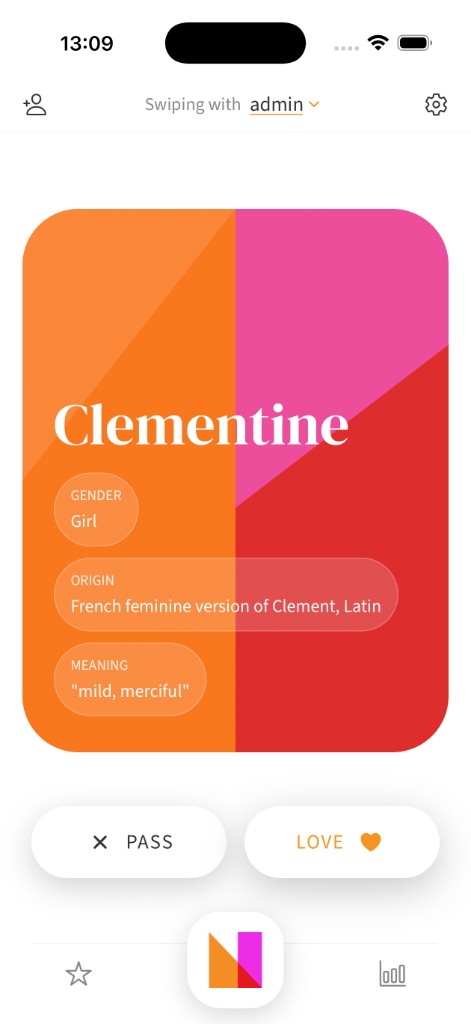
- Swipe through thousands of names with your partner
- Names you match on are saved to your shared list
- Get personalized recommendations that learn based on your and your partner's preferences
- Partner with friends and family to find names you all love
- Backed by Nameberry's 20 years of data around name preferences.