The Nibelungenlied
- Walter
Origin:
GermanMeaning:
"army ruler"Description:
Walter was seen as a noble name in the Sir Walter Raleigh and Sir Walter Scott era, but it then spent decades in baby name limbo. Now quite a few independent-minded parents are looking at it as a renewable, slightly quirky, classic, stronger and more distinctive than James or John, second only to William among the handsome classic boy baby names starting with W.
- Gunther
Origin:
GermanMeaning:
"battle warrior"Description:
When it's spelled with two dots over the 'u' in German, Gunther is pronounced GUWN-ter, but it has a much softer sound when the 'h' is voiced by English-speakers, as it was, for example, for the name of a character in Friends.
- Siegfried
Origin:
GermanMeaning:
"victorious peace"Description:
Also spelled Sigfrid, this hefty German name has an appropriately majestic meaning: "victorious peace". Fittingly, a famous bearer was the English World War I poet and pacifist Siegfried Sassoon. Sassoon was named after the hero of a Wagner opera, which in turn was based on a tragic hero from German legend.
- Alberich
Origin:
GermanicMeaning:
"elf power"Description:
In Germanic mythology, Alberich is the name of a legendary dwarf king — which is fitting, considering its meaning. Alberich is thought to be the origin of the English names Auberon and Aubrey.
- Dietrich
Origin:
GermanMeaning:
"ruler of the people"Description:
This form of Theodoric, familiar via Marlene, is a possible German import. It is an Anglicized ancestor of Derek and all its variations. A noted bearer was acclaimed classical German baritone and conductor Dietrich Fischer-Dieskau, and there have been Dietrichs in Henry James's The Princess Casamassima,/em and more recently on the TV show Psych.
- Hagen
Description:
Hagen is a masculine name with Germanic roots, derived from the Old German word 'hag' meaning 'enclosure' or 'hedge'. In Norse mythology, Hagen (or Högni) appears as a character in the Nibelungenlied, where he is portrayed as a loyal but ultimately tragic figure. The name has remained relatively uncommon in English-speaking countries but enjoys more popularity in Germany and Scandinavian countries. Hagen carries connotations of strength, loyalty and protection, reflecting its historical associations with warriors and guardians. In modern usage, it appeals to parents seeking a strong, distinctive name with historical depth and European heritage.
- Wolfhart
Description:
Wolfhart is a strong Germanic masculine name combining 'wolf' (the animal) and 'hart' meaning 'brave,' 'strong,' or 'hardy.' This powerful compound name dates back to medieval Germany, where animal-inspired names were common and conveyed desirable traits like courage and resilience. The wolf held significant symbolism in Germanic cultures, representing loyalty, protection, and warrior qualities. Wolfhart remains extremely rare in modern usage, primarily appearing in German-speaking regions or among families with strong Germanic heritage. The name carries distinctive old-world character and might appeal to parents drawn to names with explicit meanings, historical depth, or connections to Germanic folklore and mythology. Its bold, unmistakable nature makes it a statement name with ancient roots.
- Brunhild
Origin:
NorseMeaning:
"armed for battle"Description:
One of the Valkyries, still clad in heavy armor.
- Volker
Description:
Volker is a traditional Germanic masculine name derived from the Old High German elements 'folk' meaning 'people' and 'heri' meaning 'army' or 'warrior.' Historically, it translates to 'people's guardian' or 'defender of the people.' The name appears in the medieval German epic 'Nibelungenlied,' where Volker is a brave knight and skilled musician. Popular primarily in Germany, Austria, and other German-speaking regions, Volker saw its greatest popularity during the mid-20th century. While less common among younger generations today, it maintains an air of classical strength and cultural heritage. The name conveys reliability and service to community, making it a dignified yet increasingly distinctive choice in the modern era.
- Ortwin
Origin:
GermanMeaning:
"point friend"Description:
An unusual route to the winning nickname Win.
- Gere
Description:
Gere is a concise masculine name with multiple potential origins. It may be derived from the Germanic element 'ger' meaning "spear" or "warrior," connecting it to names like Gerhard or Gerald. Alternatively, it could be a short form of these longer Germanic names. In some contexts, it might be a surname used as a given name, as popularized by American actor Richard Gere. The name is quite uncommon as a first name in most Western countries, giving it a distinctive quality. Gere has a strong, simple sound that's easy to pronounce across languages, making it internationally accessible despite its rarity. The name's brevity gives it a modern feel despite its potentially ancient roots.
- Siegmund
Description:
Siegmund is a masculine German name with ancient Germanic roots, combining the elements 'sieg' meaning 'victory' and 'mund' meaning 'protection' or 'hand.' This powerful name appears in Germanic mythology and was made famous through Wagner's opera 'Die Walküre,' where Siegmund is a heroic character. The name has several spelling variations, including Sigmund and Sigismund. While not common in English-speaking countries, it maintains some usage in German-speaking regions. Siegmund carries connotations of strength, protection, and triumph. The name gained some recognition through Sigmund Freud, the founder of psychoanalysis. Siegmund offers parents seeking a masculine name with historical depth and strong meaning a distinctive option with Germanic heritage.
- Dancrat
- Dancwart
- Eckewart
- Etzel
- Gernot
- Giselher
- Hunold
- Nibelung
The Nameberry App Is Live
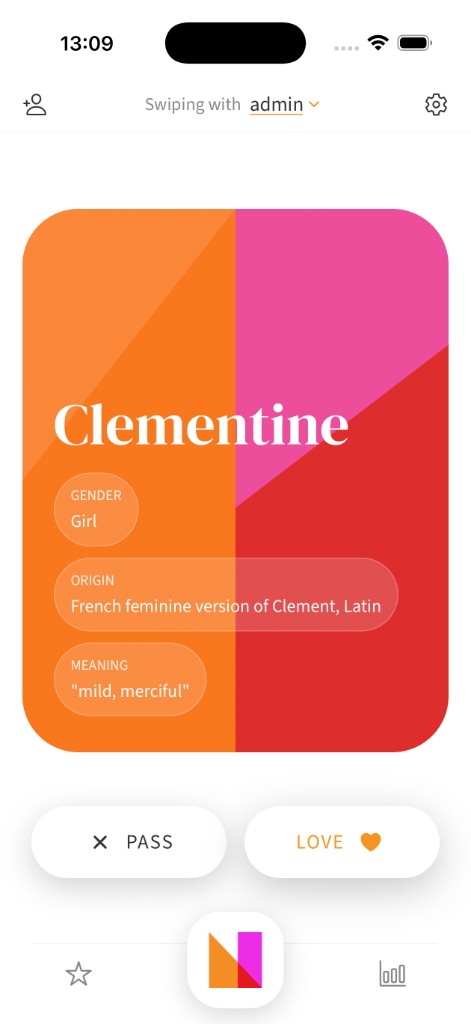
- Swipe through thousands of names with your partner
- Names you match on are saved to your shared list
- Get personalized recommendations that learn based on your and your partner's preferences
- Partner with friends and family to find names you all love
- Backed by Nameberry's 20 years of data around name preferences.