
Most Common Names In Russia For Boys

By sipping.waterfalls
Updated Sun Jan 04 2026
Share
Copy link
A list of the most common names for boys in Russia according to Forebears' list.
- Alexander
Origin:
GreekMeaning:
"defending men"Description:
Alexander has been in a Top 25 boys' name in the US for 30 years now. But namers are still attracted to its imposing historic pedigree.
- Victor
Origin:
LatinMeaning:
"conqueror"Description:
Victor is one of the earliest Christian names, borne (as Vittorio) by several saints and popes, symbolizing Christ's victory over death. It has been quietly in the Top 200 since 1880, but just recently has taken on a cool edge by fashionable parents in London and seems ripe for a similar reevaluation here too.
- Roman
Origin:
LatinMeaning:
"citizen of Rome"Description:
Roman is an ancient name trending in a major way. A surprise hit name of recent years, Roman now ranks in the Top 100 not only in the US but throughout the English-speaking world, and is rising in other European countries as well.
- David
Origin:
HebrewMeaning:
"beloved"Description:
David is an enduring worldwide classic, used from ancient times to the present day.
- Daniel
Origin:
HebrewMeaning:
"God is my judge"Description:
Daniel is one of only a handful of male names that sounds both classic and modern, strong yet approachable, and popular but not cliched. It also has a solid Old Testament pedigree. The only real downside: There are about 10,000 Daniels named each year, making it a less than distinctive choice.
- Robert
Origin:
English from GermanMeaning:
"bright fame"Description:
Robert was the Number 1 boys' name in the US in both 1925 and 1950, and in fact was in the Top 25 for more than a century, giving it true classic status. Strong if not quite stylish, Robert remains in the Top 100 for baby boys as a family favorite.
- Alfred
Origin:
EnglishMeaning:
"wise counselor; elf counsel"Description:
Alfred is up off his recliner! If you're looking for a path to Fred, you can go directly to Frederick or take the long way around with the so-out-it's-in-again Alfred. Alfred is quite popular in several European countries, especially England and Wales, Norway, Sweden, and Denmark.
- Adam
Origin:
HebrewMeaning:
"son of the red earth"Description:
Adam -- a primal Old Testament name -- was revived as a 1960s cowboy name. Adam is not as popular as it once was and feels ready for a respite, replaced by newer A names like Aidan/Aiden, Avery and Axel. Its most prominent current bearers include Adams Sandler, Levine, Brody and Driver -- who plays a character named Adam on Girls.
- Ernest
Origin:
English from GermanMeaning:
"serious, resolute"Description:
Ernest is one of those sober, so-far-out-they're-beginning-to-be-reconsidered Great Uncle names. Ernest recently received a big style boost when Britain's Princess Eugenie chose it for her second son.
- Mark
Origin:
LatinMeaning:
"warlike"Description:
Mark has the rare appeal of a strong, sleek name with a minimalist modern feel and ancient roots. The name Mark is taken from the Roman god of war Mars, also the namesake of the planet.
- Idris
Origin:
Welsh; ArabicMeaning:
"ardent lord; studious, interpreter"Description:
A name that crosses cultures, Idris was virtually unknown in the US before the emergence of the charismatic actor Idris Elba, first on The Wire and then for depicting Nelson Mandela. Since then, the name has grown with the actor and is a popular choice in the UK and Belgium, and a familiar one in The Netherlands, France, and the US.
- Alan
Origin:
IrishMeaning:
"handsome, cheerful"Description:
In its three most popular spellings -- Alan along with Allen and Allan -- this midcentury favorite has tended to skew older. It was a Top 100 name from 1938 to 1971, peaking at Number 40 in 1951. Alan has had leading roles on recent TV, in shows like Two and a Half Men, 24 and Boston Legal.
- Lev
Origin:
Hebrew, RussianMeaning:
"heart; lion"Description:
This concise one-syllable name, has two possible derivations and two positive meanings associated with it. In Hebrew, it means "heart", while in Russian it means "lion". So strong and simple Lev has both a soft and a fierce side.
- Ivan
Origin:
Russian variation of JohnMeaning:
"God is gracious"Description:
Though some might find it a bit heavy-booted, Ivan is one of the few Russian boys' names to become fully accepted into the American naming pool.
- Ilya
Origin:
Russian variation of ElijahMeaning:
"the Lord is my God"Description:
A rare example of an a-ending boy's name that sounds masculine, Ilya has a large measure of creative Slavic charm. >p>Ilya Ilyich Oblomov is the central character in Goncharov's novel "Oblomov." Unfortunately, he spends most of his life in his bathrobe and slippers.
- Albert
Origin:
GermanMeaning:
"noble, bright"Description:
Albert has acquired a new gloss as one of the top royal baby boy names, a considerable upgrade from its serious, studious image (think Einstein, Schweitzer).
- Emil
Origin:
LatinMeaning:
"rival"Description:
Derived from the Latin word aemulus, Emil is a name with international appeal. Concise and sturdy but with the gentle Em sound, Emil is popular across Europe, from Azerbaijan to Finland, from Germany to Norway, and Denmark. Alternative spelling Emile also ranks highly in Belgium and Canada.
- Malik
Origin:
Arabic; GreenlandicMeaning:
"king; owner; wave"Description:
A name with many spelling variations, including Malek, Melik, and Maliq, Malik is a popular name of Arabic and Semetic origin that is used internationally as both a given name and a surname. In terms of meaning, it can be considered a royal name meaning "king", though other sources suggest it is an alternative transcription of Maalik, making "owner, possessor" a more accurate meaning.
- Aslan
Origin:
TurkishMeaning:
"lion; fearless"Description:
Aslan, derived from the Old Turkic word arslan, meaning "lion," is best known in the West as the name of the heroic lion in C.S. Lewis' "Chronicles of Narnia" series, who serves as an allegorical stand-in for Jesus Christ. It was also used as a positive epithet for several Turkish emperors in the Middle Ages.
- Erik
Origin:
Spelling variation of Eric, Old NorseMeaning:
"eternal ruler"Description:
While substituting a C for a K is a modern trend, Erik is in fact the traditional spelling of the name, derived from the Old Norse Eiríkr and introduced to the English speaking world in the Anglo-Saxon period. Now, Erik is popular in Scandinavia and throughout much of Central and Eastern Europe, where it ranks in the Top 100 in Germany, Slovenia, Hungary, and more.
The Nameberry App Is Live
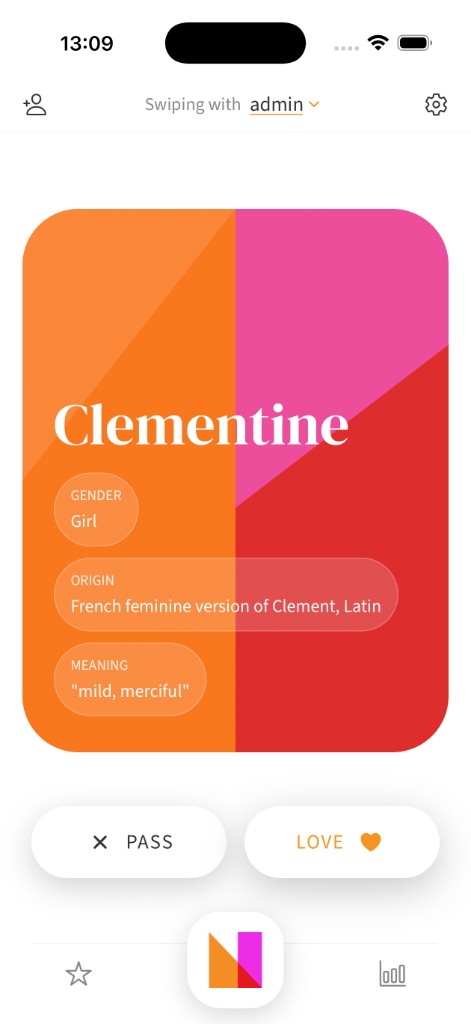
Find your perfect baby name together in our iPhone app, now available on the App Store.
- Swipe through thousands of names with your partner
- Names you match on are saved to your shared list
- Get personalized recommendations that learn based on your and your partner's preferences
- Partner with friends and family to find names you all love
- Backed by Nameberry's 20 years of data around name preferences.