French Medieval Names
- Vianney
Origin:
FrenchMeaning:
"alive, lively"Description:
Transferred from the surname Vianney, in reference to French saint Jean-Marie Vianney, this name is a diminutive form of Vivian and Vivien, sharing the same spirited meaning. Associated with the patron saint of all priests within the Catholic Church, it is generally used as a masculine name in France, Belgium, Canada, and French-speaking Africa, but in Latin America, it is mainly feminine.
- Bertille
Origin:
FrenchMeaning:
"heroine, bright maiden"Description:
The name of medieval French saint, similar to Sally Field's name, Bertrille, on the old The Flying Nun sitcom, leading some to expect the word "Sister" in front of it.
- Léopold
Origin:
French from GermanMeaning:
"brave people"Description:
French form of Leopold.
- Rodolphe
Description:
Rodolphe is the French form of the Germanic name Rudolf, composed of the elements 'hrod' meaning 'fame' and 'wulf' meaning 'wolf.' This sophisticated masculine name carries an air of European elegance and aristocratic heritage. Throughout history, Rodolphe has been borne by various nobility, including Rodolphe I of Habsburg, the first Habsburg King of Germany. While more common in French-speaking regions like France, Switzerland, and parts of Canada, it remains relatively uncommon in English-speaking countries. The name evokes images of refinement and cultural sophistication, often associated with the arts, particularly after Puccini's opera 'La Bohème' featured a character named Rodolphe.
- Aloys
Origin:
Variation of Alois or Aloysius, LatinMeaning:
"famous warrior"Description:
Aloys derives from Alois, a form of the Latin Aloysius which is a relative of the German and French Louis. Aloys has been particularly popular in German-speaking countries, especially Austria, Bavaria, and Switzerland. It has notable associations with composer Aloys Fleischmann and the Catholic saint Aloysius Gonzaga, whose name variations include Aloys.
- Isaure
Description:
Isaure is a feminine French name with ancient origins, possibly derived from the name Isaura, which referred to someone from Isauria, a region in ancient Asia Minor (now part of Turkey). The name has literary connections, appearing in medieval French poetry and troubadour traditions where 'Clémence Isaure' was said to have been a patroness of poetry competitions. Isaure has remained relatively rare even in France, giving it an air of refinement and uniqueness. The name has a delicate, elegant sound typical of classical French names. In contemporary usage, Isaure appeals to parents seeking a name with historical depth, poetic associations, and a distinctively French character.
- Grégoire
Description:
Grégoire is the French form of Gregory, a name with ancient Greek origins derived from "gregorein," meaning "watchful" or "vigilant." The name carries a distinguished heritage, with numerous important historical figures including many popes and saints bearing variations of this name. The French spelling with the acute accent gives the name a sophisticated, continental flair. Grégoire is moderately common in French-speaking regions but remains distinctive elsewhere. The name has a refined, intellectual quality with its smooth sound and elegant pronunciation (greh-GWAHR). Parents might choose Grégoire for its cosmopolitan character, cultural richness, and the subtle blend of strength and sophistication it conveys. The name offers versatility across languages while maintaining its distinctly French character.
- Perceval
Description:
Perceval is a masculine name with ancient Arthurian roots, originating from Welsh mythology and medieval romance literature. It comes from Old French "Perceval" or Welsh "Peredur," though its exact etymology remains debated - possibly meaning "pierce the valley" or "he who searches for the valley." Perceval was one of King Arthur's Knights of the Round Table and a central figure in the quest for the Holy Grail. This rare name carries an air of chivalry, heroism, and mysticism, evoking images of medieval quests and noble pursuits. While uncommon in modern usage, it appeals to parents seeking a name with literary significance and historical depth, particularly those drawn to Arthurian legends or medieval history.
- Gautier
Origin:
French variation of WalterMeaning:
"ruler of an army"Description:
Often spelled Gauthier, this could make a distinctive way to honor Grandpa Walter, but first syllable pronounced 'goat' might be a problem.
- Stanislas
Description:
Stanislas is a masculine name of Slavic origin, specifically from the Polish name Stanisław, combining "stan" (state, condition) and "slava" (glory, fame), meaning "achieving glory" or "one who achieves glory." This distinguished name has been borne by Polish kings, saints, and notable figures throughout history, including St. Stanislas Kostka, a 16th-century Jesuit saint. While common in Poland and other Slavic countries, Stanislas remains relatively rare in English-speaking regions, giving it an air of distinction and exotic appeal. The French form Stanislas is often used internationally. The name carries a dignified, classical quality with its historical associations and elegant sound. Its nickname options include Stan, Stas, or Staś, offering versatility for different stages of life.
- Mahaut
Origin:
French from GermanicMeaning:
"battle-mighty"Description:
A medieval French form of Matilda (equivalent to the English Maud) that's made a comeback in France in recent years.
- Arthus
- Castel
- Édouard
- Aliénor
- Brunehilde
- Castille
- Ysance
- Hermance
The Nameberry App Is Live
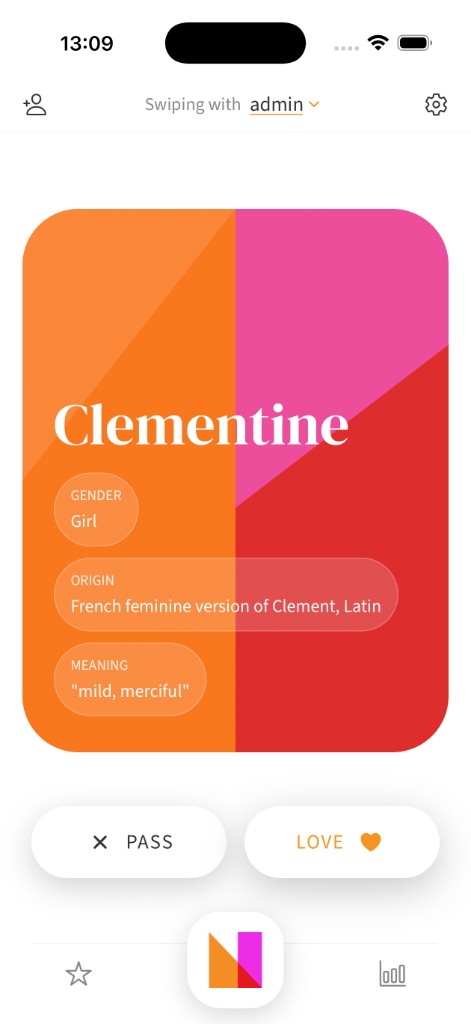
- Swipe through thousands of names with your partner
- Names you match on are saved to your shared list
- Get personalized recommendations that learn based on your and your partner's preferences
- Partner with friends and family to find names you all love
- Backed by Nameberry's 20 years of data around name preferences.