
Names Ending in I for Boys
- Eztli
Origin:
NahuatlMeaning:
"blood"Description:
A unisex Nahuatl name with a strong and stylish sound, but a meaning that some might find off-putting.
- Amadei
Description:
Amadei is a masculine name of Italian origin, derived from the Latin name Amadeus, meaning "love of God" or "beloved of God." This variant maintains the spiritual significance of its root while offering a distinctively Italian form. Amadei has historical usage particularly in northern Italy, though it remains uncommon even there. The name shares etymological roots with Amadeo and Amadeus, the latter famously associated with composer Wolfgang Amadeus Mozart. With its melodic quality and flowing vowels, Amadei carries an artistic, romantic character typical of Italian names. The name offers bearers a connection to Italian heritage while providing a rare alternative to more common variants of this name family.
- Zygi
Description:
Zygi is a masculine name with Eastern European origins, primarily found in Lithuanian, Polish, and Slavic communities. It functions as a diminutive form of names containing the element 'zyg' such as Zygmunt (Polish) or Sigmund (German), meaning 'victorious protection' or 'successful defense.' The name carries a distinctive, modern feel despite its traditional roots. Zygi remains uncommon in Western countries, giving it a unique quality for those who bear it. In Lithuania and surrounding regions, the name has cultural significance while maintaining a contemporary sound. Its short, punchy nature with the distinctive 'Z' beginning creates a memorable impression, making it appealing to parents seeking something both culturally connected yet uncommon.
- Dafi
Description:
Dafi is a versatile name used for boys in Welsh culture and in Israel. In Welsh traditions, Dafi functions as a diminutive of Dafydd (the Welsh form of David), carrying the inherited meaning 'beloved.' In Hebrew usage, particularly in Israel, Dafi stands independently and means 'laurel' or can relate to honey and sweetness. This short, modern-sounding name has gained moderate popularity in Israel while remaining distinctive in international contexts. With just two syllables, Dafi offers simplicity and ease of pronunciation across languages, contributing to its cross-cultural appeal. The name balances a contemporary feel with meaningful cultural roots, making it attractive to parents seeking a name that is both accessible and uncommon. Dafi's dual cultural heritage adds depth to its compact form.
- Erkki
Description:
Erkki is a Finnish masculine name that serves as the Finnish equivalent of Eric or Erik. Deriving from the Old Norse name Eiríkr, Erkki ultimately means "eternal ruler" or "ever powerful," combining the elements "ei" (ever, always) and "ríkr" (ruler, king). The name has been consistently popular in Finland for generations, representing a cornerstone of traditional Finnish naming practices. Erkki carries strong associations with Finnish national identity and cultural heritage. The double 'k' consonant sound is characteristic of Finnish phonology, giving the name its distinctive pronunciation. While primarily used in Finland and among Finnish diaspora communities, Erkki's straightforward pronunciation makes it accessible to speakers of other languages, though it remains strongly associated with Finnish culture.
- Choji
Origin:
JapaneseMeaning:
"second butterfly"Description:
Ethereal Japanese boy name.
- Vrai
Origin:
French word nameMeaning:
"true"Description:
A happy combination of several desirable genres: it's a word name, it has a foreign accent, and it has a highly virtuous meaning. And few other parents will be bold enough to choose it.
- Ferni
Origin:
Diminutive of Fernando, Portuguese and Spanish variation of Ferdinand, GermanMeaning:
"brave voyager"Description:
Ferni is a masculine name with likely Germanic or Latin roots. It may have originated as a diminutive of Fernando or Ferdinand, which means 'journey, adventure' or 'bold voyager.' Alternatively, it could be derived from the Latin 'fernus' relating to ferns or greenery.
- Hiroyoshi
Origin:
JapaneseMeaning:
"large honor; vast excellence"
- Joni
Origin:
Diminutive of Jon, English from HebrewMeaning:
"God is gracious; gift of Jehovah"Description:
As a male name, Joni is a nickname for Jon or Jonathan, akin to Johnny or Jonny. It's more commonly used as a girl name, where it originated as a nickname for Joan.
- Paaveli
Description:
Paaveli is a Finnish masculine name that serves as the Finnish form of Paul. Derived from the Latin name Paulus, meaning 'small' or 'humble,' it carries the same historical and religious significance as its more common variants. In Finland, the name has maintained traditional usage, though it's not among the most common Finnish names in contemporary times. Paaveli has a distinctly Nordic character with its double vowels and balanced syllables, embodying Finnish phonetic patterns. Outside Finland and Finnish communities, the name remains quite rare, giving it an exotic quality while still connecting to the widely recognized name Paul. The name's cultural specificity makes it a meaningful choice for those with Finnish heritage seeking to honor their ancestry, while its melodic sound and accessible pronunciation make it workable in various international contexts.
- Osmani
Description:
Osmani is a masculine name with multicultural roots, primarily connected to Turkish and Arabic origins. The name derives from the Ottoman dynasty, founded by Osman I, with the 'i' suffix traditionally indicating 'of or belonging to Osman.' In Arabic contexts, the name relates to Uthman, meaning 'baby bustard' (a type of bird), which was the name of the third caliph of Islam. Osmani carries historical significance while maintaining a distinctive sound. The name has moderate usage in Turkish, Arabic, and Albanian communities, and has spread to other regions through migration. With its strong consonants and open ending, Osmani projects confidence and heritage. For parents seeking a name with historical depth and multicultural connections, Osmani offers substance and distinction.
- Ojai
Origin:
California place nameDescription:
This name of an attractive and arty California town could make an unusual but friendly choice.
- Olexi
Origin:
GreekMeaning:
"defending men"Description:
One of the many attractive variations of the classic Alexander.
- Nayiri
Origin:
ArmenianMeaning:
"land of canyons; land of rivers"Description:
Referring to the ancient region of Nairi and its breathtaking landscape, Nayiri is a gender-neutral name in Armenia.
- Giovonni
Description:
Giovonni is a masculine name that appears to be a variant spelling of Giovanni, the Italian form of John. The traditional Giovanni derives from the Hebrew name Yochanan, meaning 'God is gracious.' This particular spelling variation with an 'o' in the middle syllable gives the name a distinctive touch while maintaining its Italian essence. The name carries the warm, melodic quality characteristic of Italian names with their flowing vowels and rhythmic consonants. While less common than the standard Giovanni spelling, Giovonni offers a subtle twist that personalizes the name while preserving its cultural connections and familiar pronunciation. The name evokes associations with Italian heritage, artistic tradition, and Mediterranean warmth.
- Damari
Origin:
Variation of AmariDescription:
Damari is thought to be a variation of the popular trans-cultural name Amari with the Da- prefix. Amari means "eternal" in Hebrew and may mean "strength" in Yoruba, though other sources list the African meaning as unknown.
- Amadi
Origin:
AfricanMeaning:
"free man"Description:
This name from the Igbo language of Africa, which feels like the more-familiar Arabic Ahmad, might be an original and attractive choice.
- Valerii
Description:
Valerii is a masculine name with ancient Roman origins, derived from the Latin name Valerius, meaning 'to be strong' or 'to be healthy.' It's the original Latin form of the more common Valery or Valerie. Particularly popular in Eastern European countries, especially Russia and Ukraine, Valerii maintains strong cultural connections to Slavic heritage. The name carries an air of classical dignity and strength, reflecting its etymological roots in wellness and vigor. While less common in Western countries, Valerii has maintained consistent usage throughout history in Eastern Europe. The double 'i' ending is characteristic of the traditional Russian spelling, distinguishing it from Western variants. The name conveys both historical depth and a certain aristocratic quality.
- Eugeni
Origin:
Catalan form of Eugene, GreekMeaning:
"wellborn, noble"Description:
Like Eugene, this is a grandpa name in its native Catalonia, though with vintage revival potential.
The Nameberry App Is Live
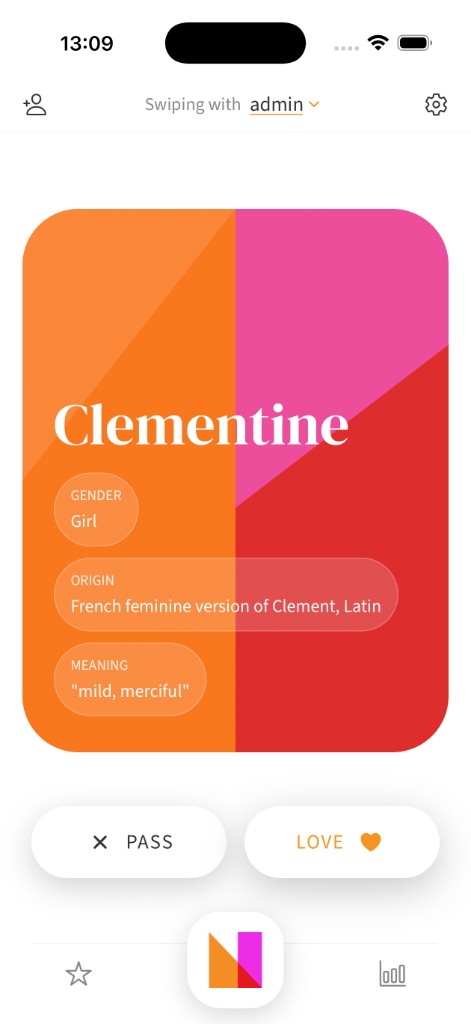
- Swipe through thousands of names with your partner
- Names you match on are saved to your shared list
- Get personalized recommendations that learn based on your and your partner's preferences
- Partner with friends and family to find names you all love
- Backed by Nameberry's 20 years of data around name preferences.