
Basque Names for Boys
Here is a selection of Basque boys' names for your consideration. The top names below rank among the current US Top 1000 Baby Names and are ordered by popularity. Unique names rank below the Top 1000 and are listed alphabetically.
- Xavier
Origin:
BasqueMeaning:
"new house"Description:
Xavier originated is use as a given name after Saint Francis Xavier, cofounder of the Jesuit order, who got his name from the Spanish-Basque village where he was born. His birthplace was Javier, the name of which was derived from the Basque place name Etxeberria, meaning "castle" or "new house."
- Inigo
Origin:
Basque, medieval Spanish variation of IgnatiusMeaning:
"fiery"Description:
Inigo, almost unknown in the U.S., is an intriguing choice, with its strong beat, creative and evocative sound, and associations with the great early British architect and stage designer Inigo Jones. The sixteenth-seventeenth century Jones shared his name with his father, a London clockmaker, who received it when Spanish names for boys were fashionable in England, especially among devout Roman Catholics.
- Iker
Origin:
BasqueMeaning:
"visitation"Description:
Long an extremely popular name in Spain, Iker (usually pronounced EE-kuhr in the English speaking world) is the rare Basque name that's starting to make it big in the States also, thanks to soccer player Iker Casillas. Indeed, it's been one of the fastest growing boys' names of the decade.
- Eneko
Origin:
BasqueMeaning:
"my little one"Description:
Despite Eneko's very sweet meaning, it packs a lot of historical punch. Eneko Aritza was the first Basque king of Pamplona. It is somewhat related to the more well known Inigo.
- Zorian
Description:
Zorian is a masculine name with Slavic and Greek roots. It derives from the Slavic element 'zor' or 'zori' meaning 'dawn' or 'sunrise,' symbolizing new beginnings and hope. Some connect it to the Greek name Zorus or to Zorios, an epithet of Apollo as a god of light. In Eastern European countries, particularly Russia, Ukraine, and Poland, Zorian has historical usage though it remains relatively uncommon. The name carries a celestial quality with its connection to light and daybreak, while its distinctive sound offers a contemporary feel despite its ancient origins. Zorian has gained modest international appeal in recent years as parents seek names that are both meaningful and uncommon, with a balanced combination of strength and melodic quality.
- Ilari
Origin:
Finnish form of Hilarius, Roman, LatinMeaning:
"cheerful"Description:
Light and cheerful as its meaning but with plenty of substance, Ilari is the Finnish form of Hilarius and Hillary. Used as a masculine name in Finland, it is used, albeit quietly, as a unisex option elsewhere.
- Zeru
Origin:
BasqueMeaning:
"sky"Description:
English speakers will think you invented this one, but it's a hidden nature name from the Basque country in present-day Spain. Some may find it too close to "zero" for comfort.
- Unai
Origin:
BasqueMeaning:
"cowherd"Description:
Popular name in Spain's Basque country, thanks to cowboyish meaning, virtually unknown elsewhere.
- Ilario
Origin:
Latin from GreekMeaning:
"cheerful, happy"Description:
Ilario's merry, jovial sound reflects a shared root with the word hilarious.
- Zadornin
Origin:
BasqueMeaning:
"Saturn"Description:
If you want something truly different that also has an interesting origin and meaning, this is a far-out -- if not unlikely -- possibility.
- Izar
Origin:
BasqueMeaning:
"star"Description:
Used more for girls in Europe, but definitely sounds masculine enough for a boy here.
- Zorion
Origin:
BasqueMeaning:
"happiness"Description:
Zorion may seem like a funky variation of Orion or Zorro to most English-speakers, but it is a genuine Basque name meaning happiness. The feminine version of this lovely name is Zorione.
- Mikel
Origin:
Basque and Scandinavian variation of MichaelMeaning:
"who is like God"Description:
A Basque and Scandinavian form of Michael, pronounced MEE-kel. In the US, it is sometimes chosen as a modern alternative spelling of Michael.
- Ibon
Origin:
BasqueMeaning:
"river"Description:
Ibon is a masculine Basque name with ancient origins in the Basque Country, a region spanning parts of northern Spain and southwestern France. Compact and distinctive, Ibon has remained somewhat exclusive to Basque communities, where maintaining cultural heritage through traditional naming practices holds particular importance. The name is also associated with Ibón, the Basque word for small mountain lakes formed by glaciers in the Pyrenees, giving it a connection to the striking natural landscape of the region. Despite its brevity, Ibon carries cultural significance for those of Basque heritage. Outside Basque communities, the name remains unusual but accessible, with its simple pronunciation and spelling making it internationally viable.
- Elazar
Description:
Elazar is a masculine name with Hebrew origins, meaning 'God has helped' or 'God's assistance.' This biblical name appears in the Old Testament as the name of Aaron's son and has been used consistently in Jewish communities for thousands of years. The name Elazar is the original Hebrew form of the more common Eleazar or Lazarus. It carries deep religious significance and remains particularly popular in Orthodox Jewish communities. The name experienced increased usage in Israel during the 20th century and has seen modest interest in other countries as parents seek names with historical depth and spiritual meaning. Elazar combines ancient heritage with a strong, distinctive sound.
- Imanol
Origin:
Basque, from HebrewMeaning:
"God is with us"Description:
This intriguing Basque variation of Emmanuel has a handsome and distinct sound.
- Aureline
Description:
Aureline is an uncommon masculine name with Latin origins, derived from "aureus" meaning "golden" or "gilded." It's related to the more familiar feminine name Aurelia and the masculine Aurelius, names that were popular in ancient Rome. Aureline suggests qualities of brightness, value, and radiance. While not widely used in modern times, it carries an elegant, somewhat aristocratic quality. The name may appeal to parents seeking something distinctive with classical roots. Aureline shares connections with other gold-related names like Aurelia, Aurelio, and Orion. Its rarity gives it a unique quality while still retaining recognizable linguistic elements and a melodious sound.
- Andoni
Origin:
Basque variation of Anthony, LatinMeaning:
"from Antium"Description:
Andoni is the Basque version of Anthony, no longer a common choice in Spain.
- Iara
Description:
Iara, while listed as masculine here, is traditionally a feminine name with Brazilian origins, derived from ancient Tupi-Guarani mythology. In Brazilian folklore, Iara (or Yara) is a water nymph or siren-like figure, often depicted as a beautiful woman with green hair who lives in the Amazon River. The name means "water lady" or "lady of the lake" in the indigenous Tupi language. Iara has a melodic, flowing quality that reflects its connection to water. It remains moderately popular in Brazil and has gained some international recognition. The name carries an exotic appeal with its mythological roots and musical sound. Iara possesses a mystical quality while remaining accessible and pronounceable across different languages.
- Xarles
Description:
Xarles is a masculine name that originates as a Basque variant of Charles, which derives from Germanic roots meaning 'free man' or 'warrior.' The distinctive 'X' spelling reflects the Basque language's orthography, where the 'X' is pronounced similar to 'ch' or 'sh.' While extremely rare outside of Basque regions in northern Spain and southwestern France, this name carries strong cultural significance for those with Basque heritage. Xarles represents a way to honor both Basque culture and the widespread Charles/Carlos name tradition. The unique spelling gives this ancient name a modern, distinctive appearance while maintaining its traditional pronunciation and meaning. For parents seeking a name with European roots and an unusual spelling, Xarles offers a compelling option.
The Nameberry App Is Live
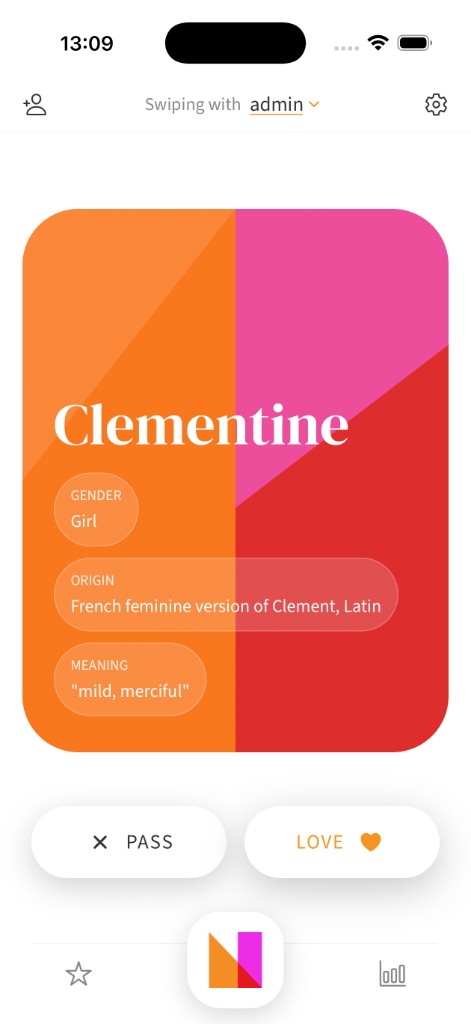
- Swipe through thousands of names with your partner
- Names you match on are saved to your shared list
- Get personalized recommendations that learn based on your and your partner's preferences
- Partner with friends and family to find names you all love
- Backed by Nameberry's 20 years of data around name preferences.