
Princess Names (With Meanings and Popularity)


The princess names for girls here are those chosen by royal families around the world over the past decade or so. Your idea of princess names can be expanded to include those used over past generations—Anne and Elizabeth and even Diana, say— and to extend to fictional princesses such as Ariel and Aurora.
Along with Elizabeth and Aurora, other princess names in the US Top 100 include Alice, Amelia, Ariana, Charlotte, Isabella, Josephine, Lily, and Sophie. The more unique princess names, including Fabiola, Khadija, Leonore, and Ulrike, come from the royal families of countries such as Morocco, Sweden, and Austria.
Many of the real little princesses have three or four middle names, some of which are also included on this list. These princess names are ordered by their current popularity on Nameberry.
RELATED:
- Eloise
Origin:
French and English variation of HeloiseMeaning:
"healthy; wide"Description:
Well balanced between sleek, sweet, strong, and vintage, newly chic Eloise re-entered the US Top 1000 in 2009, following a 50-year absence. In 2022, it broke into the Top 100 in the US and across the pond in the UK. Given to nearly 3000 babies each year, Eloise is showing no sign of stepping out of the spotlight.
- Alice
Origin:
GermanMeaning:
"noble"Description:
Alice is a classic literary name that's both strong and sweet, ranking in the US Top 100 and popular throughout the Western world. Alice is derived from the Old French name Aalis, a diminutive of Adelais that itself came from the Germanic name Adalhaidis, which is composed of the Proto-Germanic elements aþala, meaning "noble," and haidu, "kind, appearance, type."
- Sadie
Origin:
Diminutive of SarahMeaning:
"princess"Description:
Sadie started as a nickname for Sarah, but their images couldn't be more disparate. Where Sarah is serious and sweet, Sadie is full of sass and fun.
- Anastasia
Origin:
Greek, feminine variation of AnastasiosMeaning:
"resurrection"Description:
Anastasia is the feminine form on Anastasius, a Greek name derived from the word anastasis, meaning "resurrection." It was a common name among early Christians, who often gave it to daughters born around Christmas or Easter. There are handful of saints named Anastasia, including the patron saint of weavers.
- Josephine
Origin:
French feminine variation of Joseph, HebrewMeaning:
"Jehovah increases"Description:
Josephine, with its large measure of class and character and a gently offbeat quality, has been on a gentle uphill climb in the US for over 30 years, now ranking in the Top 100. With an intriguing number of vivacious nicknames, from Jo to Josie to Fifi to Posy, Josephine is a Nameberry favorite.
- Astrid
Origin:
ScandinavianMeaning:
"divinely beautiful"Description:
Astrid has been a Scandinavian royal name since the tenth century, and many people associated it with the Swedish author of the Pippi Longstocking stories, Astrid Lindgren. Astrid is derived from the name Ástríðr, which is made up of the Old Norse elements that mean "god" and "beautiful."
- Charlotte
Origin:
French, feminine diminutive of CharlesMeaning:
"free man"Description:
Charlotte, the name of the young Princess of Cambridge, is the latest classic name to join Sophia, Emma, Olivia, and Isabella at the top of the popularity list. It is now among the most popular girl names in many English-speaking and European countries.
- Sophie
Origin:
French variation of Sophia, GreekMeaning:
"wisdom"Description:
Sophie is the French form of the Greek Sophia, for which it is also commonly used as a nickname. Given Sophia's long standing among the Top 10 girl names in the US, Sophie may feel more popular than it actually is.
- Lily
Origin:
English flower nameMeaning:
"lily"Description:
Lily is the most popular of the popular delicate century-old flower names now making a return, thanks to its many irresistible attributes: a cool elegance and a lovely sound, a symbol of purity and innocence, and a role in Christian imagery.
- Emma
Origin:
GermanMeaning:
"universal"Description:
Emma has now been among the top girl names in the United States for several years, claiming the Number 1 crown in 2008 and again from 2015 to 2018 before dropping back to second place.
- Amelia
Origin:
GermanMeaning:
"work"Description:
Amelia is one of the hottest girls' names, a successor to the megapopular Emma and Emily. Amelia, the Number 2 choice in England, is now also comfortably ensconced in the US Top 10, where it ranked as the third most popular name for girls in 2024.
- Louise
Origin:
French and English, feminine variation of LouisMeaning:
"renowned warrior"Description:
Louise has for several decades now been seen as competent, studious, and efficient—desirable if not dramatic qualities. But now along with a raft of other L names, as well as cousin Eloise, Louise is up for reappreciation—sleek and chic, stylish in Paris, and starting to become so in the US as well. Louisa is perhaps more in tune with the times, but Louise has more edge. Louise has been on the rise lately, and reentered the US Top 1000 for the first time in a quarter century in 2016.
- Isadora
Origin:
GreekMeaning:
"gift of Isis"Description:
For a long time, Isadora has been overlooked in favor of Isabella, owing perhaps to its association with the tragic modern dancer, Isadora Duncan, or because parents would rather their daughter be a Bella than a Dora. Now, with Theodora back in the charts and vintage names in vogue, Isadora has been slowly gaining more attention over the last decade.
- Estelle
Origin:
FrenchMeaning:
"star"Description:
Maybe it's because she shares that winning -elle sound with Isabel and Bella, but Estelle is no longer seen as a muumuu-wearing canasta player of a certain age (think George Costanza's mother on Seinfeld or Joey Tribbiani's talent agent in Friends). This could be in part thanks to the young Royal Couple of Sweden, who chose it for their firstborn daughter, or the single-named British R&B singer. It reentered the US Top 1000 in 2012 after a nearly fifty-year absence.
- Isabella
Origin:
Spanish and Italian variation of Elizabeth, HebrewMeaning:
"pledged to God"Description:
Isabella has been a Top 10 name for girls in the US for two decades now. The Latinate form of Isabel, a variation of Elizabeth which originally derived from the Hebrew name Elisheba, Isabella reigned as Number 1 in 2009 and 2010.
- Marie
Origin:
French variation of MaryMeaning:
"drop of the sea, bitter, or beloved"Description:
The ubiquitous French version of Mary came into the English-speaking world in the nineteenth century. In the United States, Marie was a huge hit at the turn of the last century and for the ensuing fifty years, becoming the seventh most popular name in the country for three years, from 1901 to 1904.
- Orla
Origin:
IrishMeaning:
"golden princess"Description:
Orla is an Irish name closely associated with the high king Brian Boru, as it was the name of his sister, daughter and niece. It was very popular in the Middle Ages – the fourth most popular name in twelfth century Ireland – and has become popular again in Ireland, Scotland, England and Wales today. In Irish, the name is commonly spelled Orlaith or Orlagh.
- Sarah
Origin:
HebrewMeaning:
"princess"Description:
Sarah was derived from the Hebrew word sarah, meaning "princess." Sarah is an Old Testament name — she was the wife of Abraham and mother of Isaac. According to the Book of Genesis, Sarah was originally called Sarai, but had her name changed by God to the more auspicious Sarah when she was 90 years old.
- Ingrid
Origin:
NorseMeaning:
"fair; Ing is beautiful"Description:
The luminous Ingrid Bergman's appeal was strong enough to lend universal charisma to this classic Scandinavian name, which has been somewhat neglected in the US. Even today, a child named Ingrid would be assumed to be of Scandinavian ancestry, signaling the name has never been fully integrated into the English lexicon the way other European choices from the same era like Danielle or Kathleen have.
- Beatrix
Origin:
LatinMeaning:
"she who brings happiness; blessed"Description:
Beatrix has a solid history of its own apart from Beatrice, with that final x adding a playful, animated note to the name's imposing history and stately vibe.
The Nameberry App Is Live
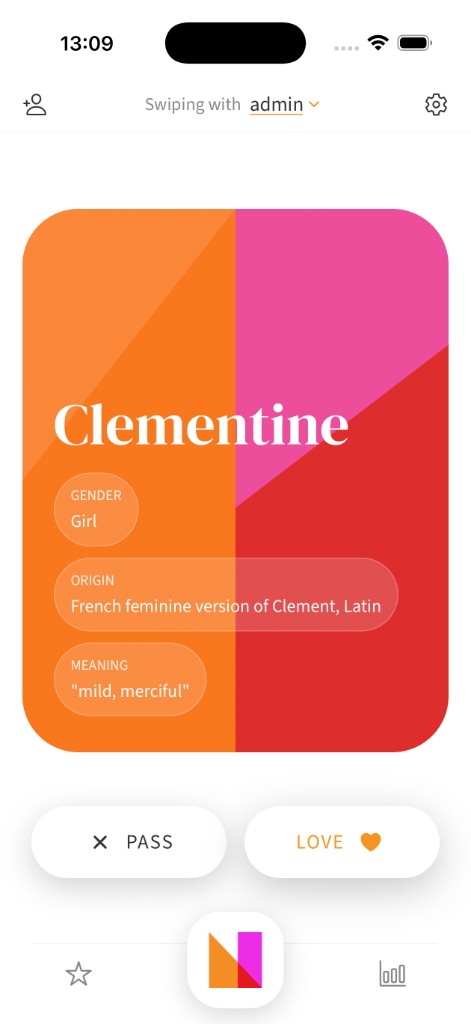
- Swipe through thousands of names with your partner
- Names you match on are saved to your shared list
- Get personalized recommendations that learn based on your and your partner's preferences
- Partner with friends and family to find names you all love
- Backed by Nameberry's 20 years of data around name preferences.