
Names that Peaked in 1919
- Clarabelle
Origin:
LatinMeaning:
"bright and beautiful"Description:
A combination name that might be dismissed as a clown and cow name. The sounds are nevertheless pretty and the meaning is good - though spellings Claribel or Clarabel might help distance it from the cow association.
- Oneida
Origin:
Native AmericanMeaning:
"long awaited"Description:
One of the few familiar Native_American choices, but now associated with several trade names.
- Loraine
Description:
Loraine is a feminine name of French origin, derived from the Lorraine region in northeastern France. The name gained notable popularity in English-speaking countries during the early to mid-20th century. Loraine represents a variant spelling of the more common Lorraine, offering a slight distinction while maintaining the same melodic pronunciation. The name carries an air of vintage elegance and sophistication, evoking the glamour of the 1930s-1950s era when it enjoyed its peak usage. While less frequently given today, Loraine continues to appeal to parents seeking a name with classic appeal and French influence. The name offers nickname options including Lori, Raine, or Rainey.
- Metro
Description:
Metro is a masculine name with Greek origins, derived from the name Demetrios or Demetrius, meaning "devoted to Demeter" (the goddess of agriculture and fertility in Greek mythology). Metro can also be seen as a nickname for Metropolitan. In Slavic countries, particularly Russia and Ukraine, it appears as a standalone given name. The name carries urban connotations in modern contexts due to its association with metropolitan areas and subway systems. Metro remains uncommon as a given name in most Western countries, giving it a distinctive quality for those seeking a rare, short, and impactful masculine name with classical roots.
- Evelyne
Origin:
Variation of Evelyn, English from French and German,"desired; or water, island"Meaning:
"desired; or water, island"Description:
Evelyn is becoming so popular that many variations are sure to become more widely used too. But in this case, the third E doesn't add anything and only confuses pronunciation: Is it Eveline?
- Loyd
Description:
Loyd is a masculine name with Germanic origins, functioning as a variant spelling of Lloyd. The name derives from the Welsh elements "llwyd" meaning "grey" or "brown," originally used as a nickname for someone with grey hair or complexion. Loyd emerged as an alternative spelling primarily in the United States during the 19th and early 20th centuries. This simplified version eliminates the double consonant while maintaining the same pronunciation. The name enjoyed modest popularity in America during the first half of the 20th century but has declined since then. Loyd conveys a straightforward, no-nonsense quality with its compact structure and strong sound. Notable bearers include various American politicians, athletes, and musicians. While less common than Lloyd, the Loyd spelling appeals to parents who appreciate its streamlined appearance and connection to traditional naming patterns while maintaining its distinctive character.
- Laverna
Origin:
LatinDescription:
Laverna was the Roman goddess of thievery, cheating, and the underworld. The original meaning of her name in unknown, however, there are several theories. One such theory states that Laverna is related to the Latin word for theif, laterniō, while another connects the name to levare, meaning "to lift," as in shoplifting. In the case of the latter, Laverna would mean "goddess of gain".
- Laddie
Description:
Laddie is a masculine name with Scottish origins, traditionally used as an affectionate term for a boy or young man in Scotland. The word 'lad' means 'boy,' and 'laddie' is its diminutive form. As a proper name, Laddie emerged primarily in the early 20th century, possibly influenced by popular culture references including the famous collie dog character 'Lassie' (with Laddie being the male equivalent). The name carries a friendly, approachable quality with its cheerful sound and informal heritage. Laddie peaked in popularity in the United States during the 1930s but has since become quite uncommon. The name evokes a sense of youthful energy and charm, with connections to Scottish culture that might appeal to families with Celtic heritage.
- Dimple
Description:
An adorable nickname for a smiley baby, but not suggested as a legal name.
- Felipa
Description:
Felipa is the feminine form of Felipe, which is the Spanish and Portuguese version of Philip. Derived from the Greek name Philippos, meaning 'lover of horses' or 'friend of horses,' this name has been used throughout the Spanish-speaking world for centuries. While less common than its masculine counterpart, Felipa carries the same distinguished history and royal connections, as numerous monarchs have borne the name Philip/Felipe. The name has a graceful, melodious sound that reflects its Latin heritage. In modern usage, Felipa remains a traditional choice in Hispanic communities, appreciated for its classic feminine elegance and cultural significance.
- Everette
Origin:
Variation of EverettDescription:
Unisex variant of Everett, influenced by famous bearers like entrepreneur Everette Taylor and country musician Leon Everette. While Everett is overwhelmingly male, Everette is used for two boys for every girl and is relatively rare, given to fewer than 100 babies of each gender.
- Florene
Description:
Florene is a feminine name derived from the Latin 'florens' meaning 'flowering' or 'blossoming.' It represents a variant of Florence, but with a slightly different ending that gives it a distinctive quality. Like Florence, it shares connections to the ancient Roman goddess Flora, who presided over flowers and spring. Florene enjoyed modest popularity in the United States during the early to mid-20th century, particularly in the 1920s and 1930s, but has since become uncommon. The name carries a vintage charm and delicate quality typical of floral-themed names from that era. With its graceful sound and positive associations with flowering beauty, Florene represents a rare but recognizable option that bridges traditional and unique naming preferences.
- Vernice
Origin:
Variation of Verna, LatinMeaning:
"springtime"Description:
Part Verna, part Bernice, Vernice saw use as a girls' name during the heyday of both those names. Both entered the Top 200 in the 1880s, where Verna lasted until 1940 and Bernice a decade longer.
- Elvera
Description:
Elvera is a feminine name with Romance language origins, likely deriving from variants of names like Elvira or Vera. The name has Spanish and Italian connections, possibly meaning 'truth' or 'true one' if related to Vera, or 'all-protecting' if stemming from Germanic elements in Elvira. Elvera enjoyed modest popularity in the United States during the early 20th century but has since become uncommon. The name carries a vintage charm with its flowing syllables and musical quality. Elvera balances uniqueness with familiarity, as its structure feels recognizable despite its rarity. In many Latin communities, the name maintains cultural significance while offering an alternative to more common choices.
- Santina
Description:
Santina is a feminine name of Italian origin, functioning as a diminutive form of Santa, meaning "saint" or "holy." The suffix "-ina" adds an endearing quality, essentially meaning "little saint" or "little holy one." The name has traditional usage in Italian families, particularly those with Catholic backgrounds, and carries connotations of purity and virtue. Santina has moderate recognition in Italian-American communities but remains relatively uncommon in mainstream American naming practices. The name has a melodic, romantic quality typical of Italian names, with its soft consonants and flowing vowel endings. Parents might choose Santina to honor Italian heritage, express religious devotion, or simply for its gentle, feminine sound and graceful character.
- Haruko
Origin:
JapaneseMeaning:
"born in spring"Description:
A traditional possibility for a Japanese or Japanese-American child born in April or May.
- Therman
Description:
Therman is a masculine name of Germanic origin, likely a variant of the name Sherman, which derives from the Old English 'scīrmann,' meaning 'shearer' or 'cutter of cloth.' Alternatively, it may be related to the German name Hermann, from 'heri' (army) and 'mann' (man). Therman has never been widely common but saw some usage in the United States in the early to mid-20th century. It has an old-fashioned, distinguished quality that carries echoes of a bygone era. The name's rarity today gives it a distinctive character for contemporary use. With its strong consonant sounds and traditional masculine feel, Therman projects reliability and steadfastness, qualities valued in traditional naming patterns.
- Lorene
Origin:
Variation of Lauren, Laura, or LorraineMeaning:
"from Laurentum; bay laurel; from Lorraine"Description:
Derived from either the Laura/Lauren/Laurence family, ultimately from the Latin laurus meaning "bay laurel", or a variation of Lorraine and Lorena, names associated with the French province of Lorraine, Lorene was familiar in the US in the early 20th century. It peaked in the 1920s, when it reached the Top 200, but had fallen out of style by the 70s. Given to 23 girls in a recent year, filmmaker Lorene Scafaria is a notable bearer.
- Syble
Description:
Syble is a feminine name that serves as a variant spelling of Sibyl or Sybil, which comes from the Greek 'sibylla,' referring to female prophets or oracles in ancient Greece and Rome. These sibyls were revered for their wisdom and ability to interpret divine messages. The name carries connotations of mystical insight, wisdom, and foresight. This spelling variation with 'y' and 'e' is less common than Sybil, giving it a distinctive quality. Syble never reached widespread popularity, remaining a relatively rare choice throughout the 20th century. The name combines ancient historical significance with a lyrical, gentle sound, appealing to parents seeking a name with both depth and uniqueness.
- Margurite
Description:
Margurite is a feminine name that represents a variation of Margaret, ultimately derived from the Greek 'margarites' meaning 'pearl.' This particular spelling shows French influence, though it differs from the standard French 'Marguerite' by omitting an 'e.' Throughout history, Margurite has existed as a less common alternative spelling, offering a slightly distinctive twist on the classic name. The name carries the same rich heritage as Margaret, which has been borne by saints, queens, and notable women throughout European history. While never achieving the widespread popularity of Margaret or Marguerite, Margurite offers a subtle uniqueness while maintaining connections to a name with profound historical significance and enduring appeal across cultures.
The Nameberry App Is Live
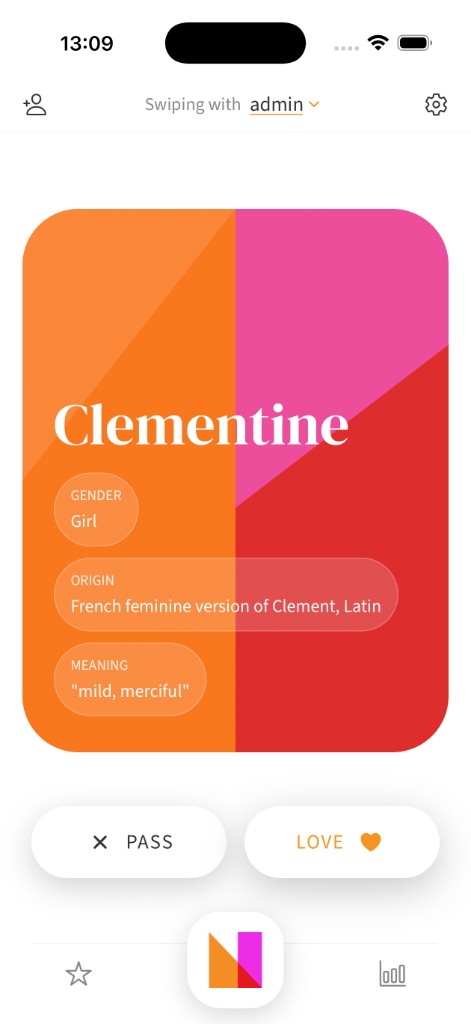
- Swipe through thousands of names with your partner
- Names you match on are saved to your shared list
- Get personalized recommendations that learn based on your and your partner's preferences
- Partner with friends and family to find names you all love
- Backed by Nameberry's 20 years of data around name preferences.