
Names that Peaked in 1918
- Aldona
Origin:
Polish, Lithunian, meaning unknownDescription:
A historical name with pagan roots that belonged to Aldona, a 14th-century Queen consort of Poland and princess of the Grand Duchy of Lithuania.
- Carlyle
Origin:
Variation of Carlisle, EnglishMeaning:
"from the walled city"Description:
Carlisle is more popular than Carlyle for both genders, and in both spellings more widely used for boys than for girls. It's a name we see on the rise in either spelling.
- Carmel
Description:
Carmel is a masculine name with rich biblical and geographical origins. Derived from Hebrew 'Karmel' meaning 'garden' or 'vineyard of God,' it refers to Mount Carmel in Israel, a significant location in biblical history. While Carmel is used for both genders, it has traditionally been more common for boys in countries with strong Catholic traditions, particularly in Ireland and Italy. The name evokes natural beauty and spiritual significance, with connections to the Carmelite religious order as well. As a male name, Carmel has maintained steady but modest usage, appreciated for its soft sound combined with historic strength. Its biblical roots appeal to religious families, while its natural connotations attract those seeking a name with depth and meaningful associations.
- Woodroe
Description:
Woodroe is a masculine name representing a distinctive spelling variation of Woodrow, which originated as an English surname meaning 'row of trees' or 'from the wooded row.' Most famously associated with President Woodrow Wilson, the standard spelling gained modest popularity in the early 20th century. The Woodroe variant is exceedingly rare, offering a unique twist that maintains the natural imagery while creating a more phonetic spelling. The name evokes woodland imagery and carries a rustic, nature-connected feeling with a touch of vintage Americana. With the rising interest in both nature-inspired names and surname-style first names, Woodroe represents an uncommon option with familiar roots and earthy character.
- Foch
Origin:
French surname, meaning unknownDescription:
Foch made the Top 1000 in 1918, the year the Allied Powers declare victory in WWI. Ferdinand Foch was the Supreme Allied Commander, whose efforts led to triumph in 1918. That year, 58 sets of parents chose his surname for their sons.
- Dorathy
Description:
Dorathy is an uncommon variant spelling of Dorothy, a feminine name of Greek origin meaning 'gift of God.' The traditional Dorothy gained significant popularity in the early 20th century, partly due to the character in L. Frank Baum's 'The Wonderful Wizard of Oz.' Dorathy represents a less common orthographic variation that maintains the same pronunciation. The name carries associations with classic femininity and vintage charm. Though Dorothy saw a decline in usage since its peak, vintage names have experienced revivals in recent decades. Dorathy remains quite rare, offering the meaning and heritage of Dorothy with a slight spelling distinction that makes it stand out on paper.
- Verl
Description:
Verl is a masculine name with Germanic origins, likely a shortened form of names containing the element 'ver-' meaning 'true' or 'faithful.' It may also be related to the German word 'Perle' meaning 'pearl.' Verl gained modest popularity in the United States during the early to mid-20th century, particularly in rural communities and Midwestern states. The name has a straightforward, no-nonsense quality that appealed to families seeking traditional masculine names. Today, Verl is considered vintage or rare, having declined in usage since the 1950s. Its short, strong sound and simplicity might appeal to parents looking for uncommon traditional names with historical roots but without elaborate spelling or pronunciation.
- Masao
Description:
Masao is a traditional Japanese masculine name composed of the elements 'masa' meaning 'correct' or 'righteous' and 'o' meaning 'male' or 'man.' This name embodies qualities of honor, integrity, and moral righteousness that are highly valued in Japanese culture. Masao gained popularity throughout the early and mid-20th century in Japan, though its usage has declined somewhat in recent decades as parents have opted for more modern naming choices. Outside of Japan, the name remains relatively uncommon but is recognized within Japanese diaspora communities. Masao has historical significance as it was borne by several notable Japanese artists, athletes, and business leaders throughout the 20th century.
- Pershing
Description:
Pershing is a masculine name with American historical roots, deriving from General John J. Pershing, the commander of American Expeditionary Forces during World War I. The surname-turned-first-name gained modest popularity in the early 20th century as a patriotic tribute to the military leader. Pershing itself has Germanic origins from the name 'Pfirsich,' meaning 'peach.' As a given name, it represents strength, leadership, and military excellence. While never extremely common, Pershing experienced a small surge following WWI but has remained rare in contemporary usage. Today, it might appeal to parents with military connections or those looking for a distinguished, uncommon name with historical significance.
- Luverne
Description:
Luverne is an uncommon feminine name with Germanic roots. It likely derives from elements meaning 'beloved' combined with either 'peace' or 'eagle.' Popular primarily in the early to mid-20th century in the United States, particularly in the Midwest, Luverne has since become quite rare. The name carries a vintage charm and is sometimes associated with small-town American values. Interestingly, Luverne also exists as a place name in Minnesota and other states. The name's melodic quality and association with love (through the 'luv' sound) gives it a gentle, affectionate feel despite its relative obscurity in contemporary naming practices.
- Berniece
Description:
Berniece is a feminine name of French and Greek origins, representing a variant spelling of Bernice, which means 'bringer of victory.' This less common spelling with the extra 'e' emerged in the early 20th century when creative variations of traditional names became fashionable. Berniece peaked in popularity in the United States during the 1920s and 1930s, fitting perfectly with the era's preference for names ending in '-ce' sounds. While it has declined in usage since the mid-20th century, it maintains a vintage charm that appeals to parents seeking revival names with historical character. The name offers the friendly nicknames 'Bernie' or 'Niece' and carries associations of strength through its victorious meaning.
- Evalyn
Origin:
Spelling variation of EvelynMeaning:
"desired; water, island"Description:
This variation draws more from Eva than from Eve, which might lead to pause as to whether it should be said EHV-eh-lin or EEV-eh-lin. While the former is more popular in the US, both pronunciations are in use, so an Evalyn might need to explain.
- Victory
Origin:
English word nameMeaning:
"victory"Description:
A winning unisex word name, fresher than Victoria or Victor. While Victory ranked only once on the US Top 1000, in 1918 at the end of World War I, it's a Top 25 name for girls in France.
- Georgetta
Description:
Georgetta is a feminine diminutive form of George, ultimately derived from the Greek name Georgios, meaning "farmer" or "earth-worker." This elaborated feminine version adds the Romance language diminutive suffix "-etta," creating a more ornate and distinctly feminine variation. Popular primarily in the early to mid-20th century, Georgetta has a vintage charm that connects to the enduring classic George while offering a more elaborate alternative to Georgia or Georgina. The name carries associations with agriculture, the earth, and honest labor through its etymological roots. While less common today, Georgetta maintains appeal for those drawn to vintage names with established histories and clear feminine identities.
The Nameberry App Is Live
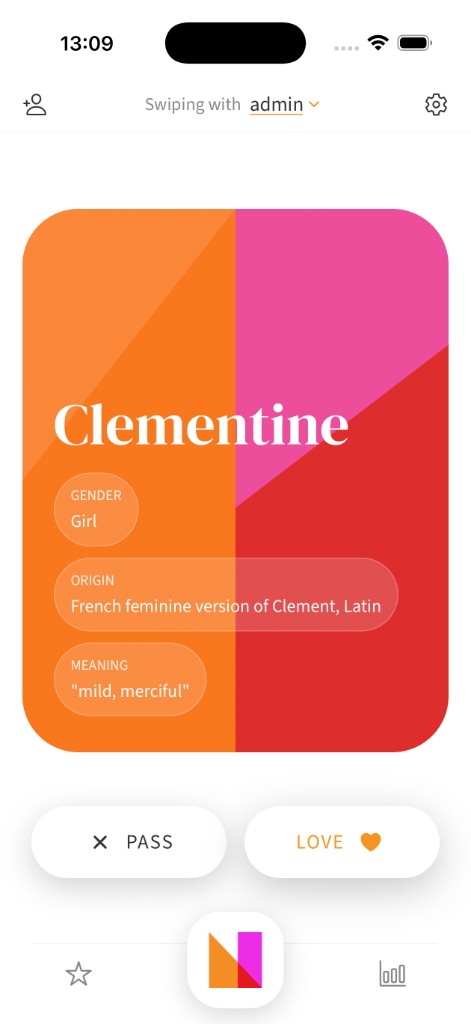
- Swipe through thousands of names with your partner
- Names you match on are saved to your shared list
- Get personalized recommendations that learn based on your and your partner's preferences
- Partner with friends and family to find names you all love
- Backed by Nameberry's 20 years of data around name preferences.