
Favorite Names That I Wouldn't Use

By maggiemary
Updated Fri Sep 02 2022
Share
Copy link
These are my favorite names that I wouldn't use, because quite simply, I would never be brave enough to do so!
- Isolde
Origin:
Welsh, GermanMeaning:
"ice ruler"Description:
Sleek, sharp, and soulful, Isolde is the German form of Iseult, the fabled lover of Tristan in the Arthurian romances. First appearing in the 12th-century, the name was fairly popular in the form of Iseult, Yseut, Yseult, and Ysolt, however, it wasn't until the 19th-century that this form began to catch on, after the composer Richard Wagner used it for his 1865 opera (and for his own daughter!)
- Juniper
Origin:
Latin tree nameMeaning:
"young"Description:
Juniper is a fresh-feeling nature name -- it's a small evergreen shrub -- with lots of energy. A new favorite of fashionable parents, Juniper joins such other tree and shrub names as Hazel, Acacia, and Willow.
- Valentina
Origin:
LatinMeaning:
"strength, health"Description:
Effortlessly stylish, with plenty of sweetness and strength, Valentina feels like a fresh alternative to Valerie, Victoria, or Vanessa, even if it does now rank ahead of them in the US charts. Popular across the globe, from Chile to Czechia, Belgium to Uruguay, Slovenia to Australia, it's a well-established choice that hasn't lost its flair.
- Florian
Origin:
LatinMeaning:
"flowering"Description:
If Flora and Florence have returned full force, Florian, with its trendy Latinate ending, could also have a chance. Popular in Germany, Austria, Switzerland, Poland, and France, St Florian was the venerated patron saint of those in danger from water and the patron saint of firefighters.
- Augustine
Origin:
LatinMeaning:
"great, magnificent"Description:
Augustine is more substantial (and saintly) than August, less pretentious than Augustus, and, along with its nickname Gus, is definitely a viable choice.
- Valentine
Origin:
LatinMeaning:
"strength, health"Description:
Valentine is an attractive Shakespearean name with romantic associations, but those very ties to the saint and the sentimental holiday have sent it into a decline, one which we think may be about to turn around.
- Wilhelmina
Origin:
German and Dutch, feminine variation of WilhelmMeaning:
"resolute protection"Description:
Wilhelmina might once have been condemned as a clunky relic best left in the past, but a steadily increasing number of parents are dusting it off for their 21st century babies. A reasonably popular choice in the 19th century, but out of favor by the 1950s, in the last decade, Wilhelmina has attracted more attention, and was given to around 110 babies in a recent year.
- Araminta
Origin:
Literature, compound of Arabella and Aminta, GreekMeaning:
"loveable; unyielding + defender; unfading"Description:
Araminta is a poetic and enchanting eighteenth-century invention with plenty of elegance and a touch of old-fashioned clunkiness. It first appeared in William Congreve's 17th century comedy The Old Bachelor and then again in 1705 when it was used by architect and playwright Sir John Vanbrugh in his play The Confederacy.
- Iolanthe
Origin:
GreekMeaning:
"violet flower"Description:
Iolanthe is known primarily through the 1882 Gilbert & Sullivan operetta of that name, in which the title character is a fairy. Iolanthe is a softer version of Yolanda, and is the kind of multi-syllabic classical name once considered too weighty for a modern baby girl, but now within the realm of possibility--this one as a dramatic twist on Violet. The biggest drawback is its variety of legitimate pronunciations in English.
- Castiel
The Nameberry App Is Live
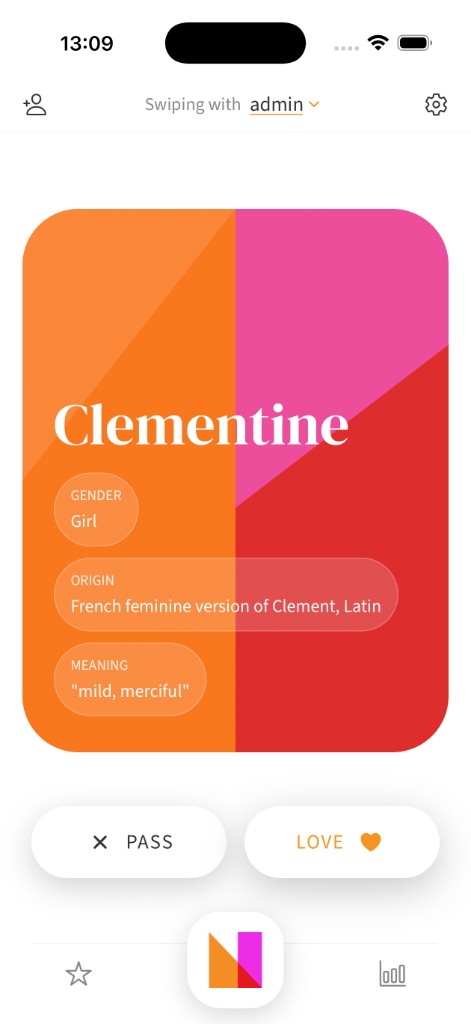
Find your perfect baby name together in our app, now available on the App Store and Google Play.
- Swipe through thousands of names with your partner
- Names you match on are saved to your shared list
- Get personalized recommendations that learn based on your and your partner's preferences
- Partner with friends and family to find names you all love
- Backed by Nameberry's 20 years of data around name preferences.