Strong classic boy names

By Meehan
Updated Sat May 20 2023
Share
Copy link
- Miles
Origin:
English form of Milo, Latin and Old German,"soldier or merciful"Meaning:
"soldier or merciful"Description:
Miles, which has a permanent veneer of cool thanks to jazz great Miles Davis, is a confident and polished boys' name that's an American classic. Always ranking in the US Top 1000, it's been drifting up the charts for the past half century and now ranks at its highest point ever, in the Top 50.
- Wyatt
Origin:
English surnameMeaning:
"brave in war"Description:
Wyatt has been hot, which is to say cool, for several years now. With its easy Wyatt Earpish cowboy charm, it's relaxed but still highly respectable.
- Gabriel
Origin:
HebrewMeaning:
"God is my strength"Description:
Gabriel is a Biblical favorite, an angelic choice that's lighter and less patriarchal than some of his Old Testament brethren. Derived from the Hebrew name Gavri'el, Gabriel combines the elements elements gever, meaning "strong," and 'el, in reference to God.
- Liam
Origin:
Irish short form of WilliamMeaning:
"resolute protection"Description:
Liam is the top boys' name in the US, holding the Number One spot for the past eight years and also ranking as one of the most popular boys' names around the western world.
- Caleb
Origin:
HebrewMeaning:
"dog; whole heart"Description:
Caleb is an attractive Old Testament name that has been in the US Top 100 for nearly three decades now. Consistently popular but never too popular, Caleb feels more like a classic than a momentary trend.
- Graham
Origin:
ScottishMeaning:
"gravelly homestead"Description:
Well used in England and Scotland since the fifties, the smooth and sophisticated Graham is catching on here.
- Harrison
Origin:
EnglishMeaning:
"son of Harry"Description:
Harrison, a name made viable by Harrison Ford, is increasingly popular with parents who want an H name that's more formal than Harry or Hank but doesn't veer into the stiff Huntington-Harrington territory.
- Evan
Origin:
Welsh variation of JohnMeaning:
"God is gracious"Description:
Evan has a mellow nice-guy image that has kept it popular, while it has been widely used in Wales since the nineteenth century. And interestingly—and surprisingly—enough, Evan charts highly for boys in France.
- Maxwell
Origin:
ScottishMeaning:
"great stream"Description:
A happy medium between the weighty Maximilian and the laid-back Max, Maxwell is one of the most classic and attractive Scottish names. Early influences on the name's revival include Maxwell Smart of the television show, and then movie, Get Smart, and the Beatles song about Maxwell's Silver Hammer.
- Samuel
Origin:
HebrewMeaning:
"told by God"Description:
Samuel has been so popular for so long that it's hard to believe it's still climbing, at its highest point since the 1890s.
- Lewis
Origin:
English variation of LouisMeaning:
"renowned warrior"Description:
Lewis is the best spelling to choose if you want this pronounced with the S. It was a Top 100 name in the US from 1880 to 1930, reaching Number 30 in 1880 and while it has declined in use, it has remained in the Top 1000 since stats began.
- Grayson
Origin:
EnglishMeaning:
"the son of the bailiff"Description:
Grayson, which you might think of as a Jason-Mason substitute, has been rising through the US Top 1000 since 1984 and has ranked in the Top 100 since 2011.
- Gavin
Origin:
CelticMeaning:
"white hawk"Description:
Gavin, a name with Scottish roots, has stepped into the spotlight, replacing the dated Kevin, thanks in part to pop-rock sensation Gavin DeGraw and Bush lead singer Gavin Rossdale.
- Quinn
Origin:
IrishMeaning:
"descendant of Conn, chief leader, intelligence"Description:
Quinn is an engaging Celtic surname, zippy, concise and strong. While it may now lean feminine in the US, given to girls about 80% of the time, it is still given to a substantial number of boys: 615 in a recent count.
- Philip
Origin:
GreekMeaning:
"lover of horses"Description:
Philip, the name of one of the 12 apostles, is still favored by parents in search of a solid boys' classic that is less neutral than Robert or John and more distinctive than Daniel or Matthew and has many historic, royal ties.
- Cooper
Origin:
English occupational nameMeaning:
"barrel maker"Description:
The genial yet upscale and preppy Cooper was one of the first occupational last names to catch on -- and Cooper remains a pleasing option.
- Roman
Origin:
LatinMeaning:
"citizen of Rome"Description:
Roman is an ancient name trending in a major way. A surprise hit name of recent years, Roman now ranks in the Top 100 not only in the US but throughout the English-speaking world, and is rising in other European countries as well.
- Quincy
Origin:
FrenchMeaning:
"estate of the fifth son"Description:
Quirky in the way that all Q names are quirky, Quincy was once a buttoned-up, patrician New England name, an image countered in recent years by the talented and ultracool musician Quincy Jones (middle name: Delight; nickname: Q).
- Carson
Origin:
English and Scottish surnameMeaning:
"son of the marsh dwellers"Description:
Carson is one of the most long-running popular androgynous baby names, with a dash of the Wild West via the legendary Missouri frontiersman Kit Carson. Dating back to when it was the name of Nancy Drew's Dad, Carson is still steadily in the Top 200 baby names.
- Grant
Origin:
Scottish from FrenchMeaning:
"large"Description:
One-time beach-boy compadre of Glenn, Greg, and Gary that originated as a nickname for a tall person, Grant has become a no-nonsense, career-oriented grown-up and one that is seeing new appreciation. It was chosen for his son by actor Morris Chestnut. It has cultural cred via artist Grant Wood, whose best known painting is 'American Gothic.'
The Nameberry App Is Live
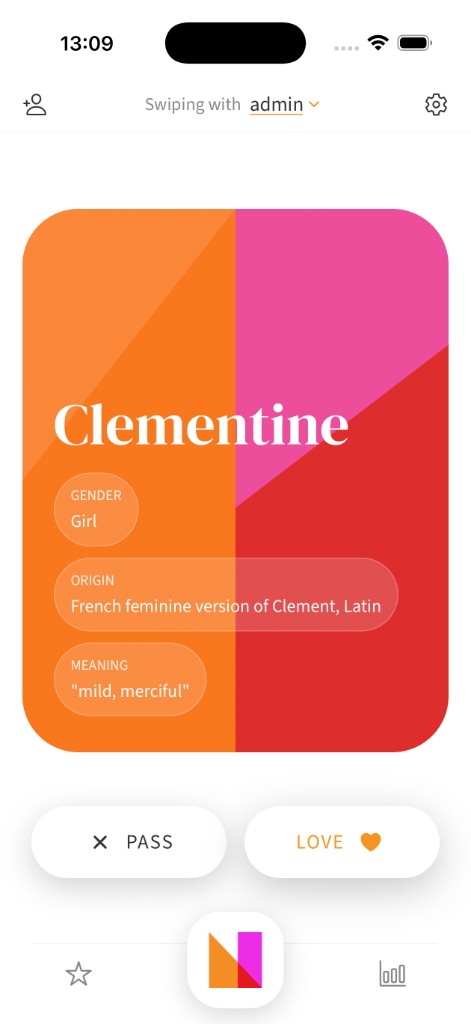
Find your perfect baby name together in our app, now available on the App Store and Google Play.
- Swipe through thousands of names with your partner
- Names you match on are saved to your shared list
- Get personalized recommendations that learn based on your and your partner's preferences
- Partner with friends and family to find names you all love
- Backed by Nameberry's 20 years of data around name preferences.