
International Variations of Christina

Christina, the most common feminine form of Christian or Christopher in the US, was most popular during the 1970s and 80s. Famous bearers of the traditional girls' name Christina include actresses Christina Applegate, Christina Hendricks and Christina Ricci, and musician Christina Aguilera, all of whom were born during the peak of the name's popularity.
Along with Christina, the only other international variation of Christina in the US Top 1000 is Christine. Scandinavian short form Stina is a top name in Sweden. Parents looking for a fresh twist on Christina, perhaps to honor a friend or family member, have many intriguing international variations to choose from. Along with the more expected ones, like Christa, Tina, and Kristin, there are a great many unique forms of Christina from around the world, like Kirsty and Cairistiona from Scotland, or Kjerstin and Kirsi from Scandinavia. Discover more beautiful international variants of Christina in the list below, ordered by their current popularity on Nameberry.
RELATED:
- Christine
Origin:
French variation of ChristinaMeaning:
"Christian"Description:
Christine was the dominant feminine variation of Christopher forty or fifty years ago, when French E-endings were preferred over As; it was a Top 20 name for several years, from 1966 to 1974. But though it still hangs in on the popularity list, today most any other version would be considered more stylish, from Kristen to Kirsten to Christina herself.
- Christina
Origin:
Latin, GreekMeaning:
"a Christian"Description:
Christina, a pretty and feminine, crystal clear classic, may be trending downward, but it's never out of style and its extra syllable does keep it fresher feeling than Christine. Christina's short forms Chris, Christie, and Tina might seem date to some — but used in its full form, it possesses the strength and elegance of Diana, Josephine, and Ophelia.
- Tina
Origin:
Diminutive of Christina et alDescription:
Tina, despite its petite and tinkly image, is apt these days to be replaced by the more elegant originals, Christina and Martina.It does have some strong namesakes, though, in Tina Turner (born Anna Mae), Tina Brown (born Christina), Tina Fey (born Elizabeth), and photographer Tina Barney (born Tina).
- Kristin
Origin:
German and Norwegian variation of ChristinaMeaning:
"a Christian"Description:
A crystalline name that retains its loveliness far past its prime. Its biggest downside: Eternal confusion over spelling and pronunciation. Kristen? Kirsten? It can be so confusing that many parents today opt to bypass it.
- Kirsten
Origin:
Scandinavian variation of ChristineDescription:
Lovely, authentic name -- but any Kirsten will be condemned to a lifetime of hearing "Did you say Kristen?" They're both genuine Scandinavian names but too interchangeable.
- Kristen
Origin:
Danish and Norwegian variation of ChristineMeaning:
"a Christian"Description:
Kristen may be somewhat past its fashion high point, but it remains forever crystalline clear. Possible problem: confusion with the similar Scandinavian names Kristin, Kirsten, Kirstie, et al.
- Cristina
Origin:
Italian, Spanish, Portuguese, Catalan, and Romanian variation of Christina, GreekMeaning:
"a Christian"Description:
Cristina is one case where the streamlined version feels more alluring. Cristina is found more often than Christina in many European countries and cultures, including Spanish- and Portuguese-speaking Latin and South America.
- Kia
Origin:
AfricanMeaning:
"season's beginning"Description:
Kia is a sweet, simple name that is now, unfortunately, associated with a Korean car label. Better today: Nia, Thea, or Keira.
- Kristina
Origin:
Scandinavian variation of ChristinaMeaning:
"annointed, a Christian"Description:
This streamlined form of a pretty and feminine classic may not be as popular as it once was, but it's never out of style. A royal name best used now in its full glory rather than as nicknames Kris or Kristy.
- Kirsi
Origin:
Hindi, Finnish diminutive of Kirstina and KirstenMeaning:
"amaranth blossoms; Christian, frost"Description:
This attractive multicultural name is found in India and Finland, where it is also a word meaning "frost."
- Kirstin
Description:
Kirstin is a feminine name of Scandinavian origin, representing a Norse variant of Christina, ultimately derived from the Greek word 'christianos' meaning 'follower of Christ.' Popular throughout Scandinavia and Scotland, Kirstin offers a distinctly northern European alternative to Christine or Kristin. The name reached modest popularity in the United States during the 1970s and 1980s but has since declined in usage. In Scotland and Nordic countries, various spellings including Kirsten, Kiersten, and Kjersten maintain cultural significance. Kirstin combines traditional religious roots with a crisp, modern sound. The name conveys strength and clarity with its sharp consonants while maintaining feminine qualities. For parents, Kirstin offers familiar sounds with a touch of Scandinavian heritage and slightly unconventional spelling compared to the more common Kirsten variant.
- Krista
Origin:
Czech variation of ChristinaDescription:
Krista may be past its peak -- along with all similar C-starting sisters and their K variations -- yet it's still a pretty name.
- Kirsty
Description:
Kirsty is a feminine name of Scottish origin, serving as a diminutive form of Christina or Kirsten. Popular throughout the United Kingdom, particularly in Scotland, this charming name peaked in popularity during the 1970s and 1980s. Kirsty means 'follower of Christ' and carries a bright, spirited quality that balances traditional roots with a contemporary feel. The name has been borne by several notable figures including Scottish swimmers Kirsty Balfour and Kirsty Coventry, giving it athletic associations. While its usage has declined since its peak decades ago, Kirsty maintains a place as a recognizable yet not overly common name that embodies Scottish heritage. Its friendly sound and manageable spelling make it accessible across English-speaking countries.
- Christiane
Origin:
German and French feminine form of ChristianDescription:
There are not one but two notable modern women with this name: journalist Christiane Amanpour and physician/author Christiane Northrup. In Germany, the pronunciation is kris-tee-AH-na while in France, it's kris-tee-AHN — and in the U.S., there's sure to be confusion. While Christiane is not stylish, it's a strong, attractive, unusual-though-familiar name.
- Krystyna
Description:
Krystyna is a feminine name of Polish origin, representing the Polish form of Christina. The name derives from the Greek 'Christos,' meaning 'anointed one,' carrying Christian religious significance. The distinctive spelling with 'K' and 'y' reflects Polish orthography, while maintaining the recognizable connection to the more familiar Christina. Krystyna has been popular in Poland for centuries and remains in use among Polish-American families preserving their cultural heritage. The name combines a classic, timeless quality with an intriguing, somewhat exotic appearance to English speakers. Krystyna possesses a sophisticated elegance while clearly connecting to its Eastern European roots, making it an option for parents seeking a name with both cultural depth and distinctive character.
- Stine
Description:
Stine is a feminine name primarily used in Scandinavian countries, particularly Denmark and Norway. It originated as a short form of Christine or Christina, which derives from the Greek word 'christos' meaning 'anointed one.' Compact and modern-sounding despite its traditional roots, Stine is pronounced 'STEE-nuh' in its native Scandinavian context. The name has been consistently used in Nordic countries for generations while remaining relatively unknown elsewhere, giving it a distinctive cultural identity. In recent decades, as Scandinavian naming practices have gained international attention, Stine has begun to be recognized beyond its regions of origin. The name combines brevity with a strong, clear sound that works well across language barriers despite its specific cultural associations.
- Kjersti
Description:
Kjersti is a feminine Scandinavian name, primarily used in Norway, representing a variation of Kirsten or Kirsti. These names are Nordic forms of Christina, ultimately derived from the Greek word 'christos' meaning 'anointed one.' The distinctive spelling with 'Kj' reflects traditional Norwegian orthography, where this combination creates a sound similar to 'ch' in English. Though uncommon outside Scandinavia, Kjersti carries strong cultural connections for those with Norwegian heritage. The name conveys a sense of Nordic elegance and strength. Despite its relatively rare usage in English-speaking countries, Kjersti offers an authentic option for parents seeking a name with genuine Scandinavian roots and a distinctive, yet accessible sound.
- Kriska
Description:
Kriska is a distinctive feminine name with possible Slavic or Eastern European roots, though it may also be a modern invented name. It could be a diminutive form of names containing 'Kris' elements, such as Kristina or Krista, with the '-ka' suffix common in Slavic languages as an affectionate ending. The name has a bright, crisp sound with its short syllables and strong consonants. While uncommon in English-speaking countries, Kriska offers an exotic alternative to more familiar names. The uniqueness of Kriska gives it a contemporary feel while potentially maintaining cultural connections. Its distinctive sound makes it memorable while remaining relatively simple to pronounce.
- Kristine
Origin:
Scandinavian variation of ChristineDescription:
Christine was one of the first megapopular C-to-K baby names, from Scandinavian variations such as Kristine and Kirsten to Kris, Kristy, and Kristy. While Kristine retains its krisply lovely sound, it's lost much of its kool.
- Cristy
Description:
Cristy is a feminine name that evolved as a diminutive form of Christina or Crystal, though now often stands as an independent given name. Derived ultimately from the Greek word 'christos' meaning 'anointed one,' it shares the same religious roots as Christian and Christopher. This cheerful variation gained popularity in the United States during the 1970s and 1980s, reflecting the trend toward more informal, approachable names ending with the playful 'y' sound. While the spelling 'Kristy' is also common, 'Cristy' maintains closer ties to its Latin-based origins. The name conveys a sense of brightness and freshness while maintaining connections to its more traditional forms. Though less prevalent today than during its peak, Cristy remains recognizable and accessible, appealing to parents seeking a name that balances familiarity with a touch of individuality.
The Nameberry App Is Live
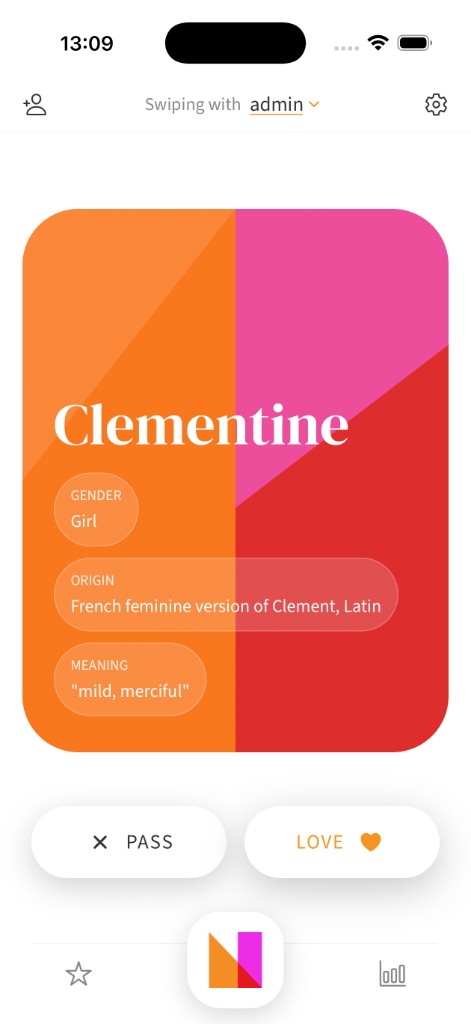
- Swipe through thousands of names with your partner
- Names you match on are saved to your shared list
- Get personalized recommendations that learn based on your and your partner's preferences
- Partner with friends and family to find names you all love
- Backed by Nameberry's 20 years of data around name preferences.