
Names from Astrid Lindgren's books
By noa
Updated Sat May 20 2023
Share
Copy link
- Mia
Origin:
Italian word name or Scandinavian short form of MariaMeaning:
"drop of the sea"Description:
Mia is an appealingly unfussy multicultural name that has enjoyed a meteoric rise up the charts and is now firmly among the ten top girl names. Mia has surpassed its mother name Maria as the Number 1 girls' name starting with M.
- Peter
Origin:
GreekMeaning:
"rock, stone"Description:
Peter is derived from the Greek Petros, meaning "rock" or "stone." One of the most important figures in the Christian hagiography is Saint Peter, keeper of the Gates of Heaven. Born Simon bar Jonah, he was given the nickname Peter by Jesus, to signify that he would be the rock on which Christ would build Christianity. Centuries later, there was Peter the Great, the czar who developed Russia as a major European power.
- Greta
Origin:
German, diminutive of MargaretheMeaning:
"pearl"Description:
Greta is an Old World name long tied to the iconic Garbo, but now synonymous with environmental activism.
- Alfred
Origin:
EnglishMeaning:
"wise counselor; elf counsel"Description:
Alfred is up off his recliner! If you're looking for a path to Fred, you can go directly to Frederick or take the long way around with the so-out-it's-in-again Alfred. Alfred is quite popular in several European countries, especially England and Wales, Norway, Sweden, and Denmark.
- Sofia
Origin:
GreekMeaning:
"wisdom"Description:
Sofia is a refined variation of the Greek name Sophia, which was derived directly from sophia, the Greek word for wisdom. It was the name of a Roman saint—the mother of Faith, Hope, and Charity—and queens of Russia and Spain.
- Alma
Origin:
Latin, Hebrew, KazakhMeaning:
"nurturing, soul; young woman; apple"Description:
Alma is a solemn, soulful, yet gentle sounding name that became fashionable in England following the Battle of Alma during the 19th century Crimean War. A name with multiple origins, Alma has subtle, international flair and plenty of vintage charm.
- Emil
Origin:
LatinMeaning:
"rival"Description:
Derived from the Latin word aemulus, Emil is a name with international appeal. Concise and sturdy but with the gentle Em sound, Emil is popular across Europe, from Azerbaijan to Finland, from Germany to Norway, and Denmark. Alternative spelling Emile also ranks highly in Belgium and Canada.
- Jonas
Origin:
Greek variation of JonahMeaning:
"dove"Description:
Jonas has a slightly more grandfatherly image than the English version of his name, but that only adds to its retro appeal. And though it may lag behind Jonah in this country, Jonas is riding a huge wave of popularity in Europe, where it ranks highly in Germany, Switzerland, Austria and Norway.
- Ida
Origin:
GermanMeaning:
"industrious one"Description:
Many vowel names stylish a century ago are coming back, and Ida seems like a possible, logical successor to Ada and Ava.
- Jonathan
Origin:
HebrewMeaning:
"gift of Jehovah"Description:
Jonathan was derived from the Hebrew name Yehonatan, eventually contracted to the modern Yonatan, meaning "gift of Jehovah." It comes from the elements yeho, in reference to God, and natan, meaning "to give." In the Old Testament, Jonathan was the valiant eldest son of King Saul, and it was his friendship with brother-in-law David that gave rise to the expression "Jonathan and David" to describe devoted, steadfast friends.
- Anders
Origin:
Scandinavian variation of AndrewMeaning:
"strong and manly, masculine"Description:
Friendly and rugged at the same time, Anders is a Scandinavian form of the Andrew and Andreas family, used across Norway, Denmark, Sweden, and in the US. Consistently in the American Top 1000 since 2010, a recent year saw it given to around 300 boys.
- Tommy
Origin:
Diminutive of ThomasMeaning:
"twin"Description:
A surprising number of parents choose to put the nickname Tommy on their son's birth certificate rather than the more traditional Thomas. Perhaps even more surprising is thE fact that Tommy has never been off the United States popularity charts. More recently, however, the name has been trending downward.
- Anton
Origin:
German, Russian, and Scandinavian variation of Anthony, LatinMeaning:
"from Antium"Description:
Cultured and cultivated in an old-style, Old World way, Anton is popular across Europe. It may be associated with the classic Russian playwright Anton Chekhov and also with ballroom dancer Anton Du Beke.
- Annika
Origin:
Swedish diminutive of AnnaMeaning:
"grace"Description:
Annika is a surprise hit of recent years, inspired by golfer Sorenstam; for Trekkies, it was also the name of a 'Star Trek:Voyager' character. Some people's first memory of it might be as Pippi Longstocking's friend. A nice namesake for an ancestral Ann.
- Erik
Origin:
Spelling variation of Eric, Old NorseMeaning:
"eternal ruler"Description:
While substituting a C for a K is a modern trend, Erik is in fact the traditional spelling of the name, derived from the Old Norse Eiríkr and introduced to the English speaking world in the Anglo-Saxon period. Now, Erik is popular in Scandinavia and throughout much of Central and Eastern Europe, where it ranks in the Top 100 in Germany, Slovenia, Hungary, and more.
- Rasmus
Origin:
Finnish and Scandinavian variation of ErasmusMeaning:
"beloved, desired"Description:
A form of ancient name newly popular in Eastern Europe, Rasmus is rugged and distinctive - and on trend in Estonia and Finland. Virtually unknown in the U.S. but with its philosophical roots and uplifting meaning, Rasmus seems prime for use. The Rasmus is a Finnish rock band.
- Elin
Origin:
Swedish variation of EllenDescription:
The Elin variation makes an old favorite sleeker and more modern. Elin came to prominence via the ex-Mrs.Tiger Woods and is now perhaps best known via novelist Elin Hildebrand.. It entered the US Top 1000 in 2010, though it's now dropped off again.
- Johan
Origin:
Scandinavian and Dutch variation of JohnMeaning:
"God is gracious"Description:
With Old European vibes, Johan is a variant of the classic John, similar to the Latin, Hebrew, and Germanic forms, Iohannes, Yohanan, and Johannes. Conjuring up the image of the classical composer Brahms or the astronomer Kepler, while still feeling timeless and distinctive, Johan has been in the US Top 600 for most of the 21st century, helped along by Heidi Klum and Seal using it for their son in 2006.
- Malin
Origin:
Scandinavian diminutive of MagdaleneMeaning:
"high tower or woman of Magdela"Description:
The sleek Malin is a contracted form of Magdalene or Madeleine, used in Sweden, Norway, and Switzerland. A popular choice back in the 2000s, it has declined in popularity in recent years, but it remains a concise and appealing choice.
- Lotta
Origin:
Short form of Charlotta or Carlotta, forms of Charlotte, FrenchMeaning:
"free man"Description:
This nickname-name is very popular in Germany, though Lottie is still the preferred version in the US. The problem, of course, is that you'll have to put up with a lotta jokes. See?
The Nameberry App Is Live
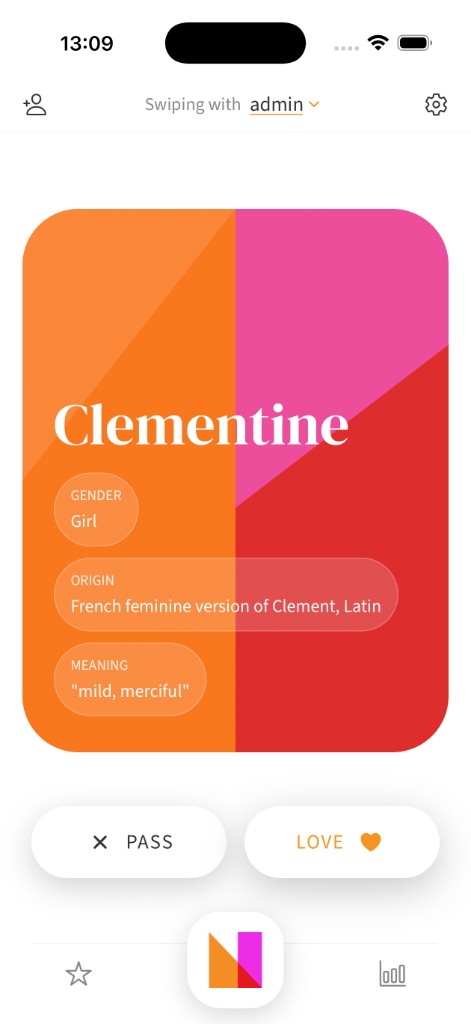
Find your perfect baby name together in our app, now available on the App Store and Google Play.
- Swipe through thousands of names with your partner
- Names you match on are saved to your shared list
- Get personalized recommendations that learn based on your and your partner's preferences
- Partner with friends and family to find names you all love
- Backed by Nameberry's 20 years of data around name preferences.