
Girls

By likristie
Updated Sun Oct 14 2018
Share
Copy link
- Maeve
Origin:
IrishMeaning:
"she who intoxicates"Description:
Maeve is a short and sweet name that has become one of the most stylish Irish names for girls in the modern US. It joined the Top 100 for the first time in 2023 and now ranks at Number 75.
- Cora
Origin:
GreekMeaning:
"maiden"Description:
Cora is a lovely, old-fashioned girls' that has been recently rejuvenated by its contemporary-feeling simplicity. In fact, Cora seemed headed straight for the top of the popularity list when the coronavirus pandemic somewhat weakened its appeal.
- Imogen
Origin:
CelticMeaning:
"maiden"Description:
Imogen has long been fashionable in England and is gaining favor in the US among stylish parents. Pronounced the British way — the initial i is short as in Kim, as is the final E as in Ken — Imogen is as pretty and classy as it is distinctive.
- Eliana
Origin:
Hebrew, Italian, Spanish, Portuguese, EnglishMeaning:
"my God has answered; sun"Description:
Eliana is a lilting, rhythmic choice, which has caught on in the US and other English-speaking countries. Currently popular in the UK, The Netherlands, Canada, and Brazil, it made the US Top 10 for the first time in 2025.
- Elizabeth
Origin:
HebrewMeaning:
"pledged to God"Description:
Elizabeth is one of the most popular girls' names of all time, the female equivalent of James or William. Yet Elizabeth has so much going for it—rich history, broad appeal, and timeless style—that no matter how many little girls are named Lizzie, Eliza, and Beth, you can still make Elizabeth your own.
- Amelia
Origin:
GermanMeaning:
"work"Description:
Amelia is one of the hottest girls' names, a successor to the megapopular Emma and Emily. Amelia, the Number 2 choice in England, is now also comfortably ensconced in the US Top 10, where it ranked as the third most popular name for girls in 2024.
- Margaret
Origin:
GreekMeaning:
"pearl"Description:
Margaret is derived from the French Marguerite, which in turn came from Margarita, the Latin form of the Greek Margarites. Margarites was based on the Old Persian word margārīta, meaning "pearl."
- Vivienne
Origin:
French variation of VivianMeaning:
"life"Description:
Vivienne is an elaborated Gallic version of the name Vivian, chosen first by Rosie O'Donnell for her daughter and then catapulted to superstardom when Brad Pitt and Angelina Jolie used it for their twin daughter. An adult namesake is the British designer Vivienne Westwood. Rosie O'Donnell also has a daughter named Vivienne, known as Vivi.
- Bianca
Origin:
ItalianMeaning:
"white"Description:
Bianca, the livelier Italian and Shakespearean version of Blanche, has been chosen by many American parents since the 1990s, just as Blanca is a favorite in the Spanish-speaking community. Its meaning of white relates to snow, making it one of the prime names for winter babies.
- Lavinia
Origin:
Latin, from ancient place name LaviniumDescription:
Lavinia is a charmingly prim and proper Victorian-sounding name which actually dates back to classical mythology, where it was the name of the wife of the Trojan hero Aeneas, who was considered the mother of the Roman people.
- Cassia
Origin:
Feminine form of Cassius or GreekMeaning:
"cinnamon"Description:
Cassia is related to the cassia tree, which has yellow flowers and produces a spice that can be a substitute for cinnamon. Keziah, the name of Job’s daughter in the Old Testament, derives from the name of the plant as well. Cassia also has ties to the Ancient Roman name Cassius, an Ancient Roman family name meaning "hollow."
- Livia
Origin:
Diminutive of Olivia or LatinMeaning:
"blue, envious"Description:
Though it sounds like a chopped-off variation of Olivia, which means olive, the distinctively attractive Livia has been an independent name since the days of the ancient Romans, when it belonged to Livia Drusilla—the powerful wife of the Emperor Augustus—and is still commonly heard in modern Italy.
- Joy
Origin:
English word nameMeaning:
"joy"Description:
Joy is from an older generation of word names, which also included Merry, Bliss, and Glory -- all of which exert a certain amount of personality pressure on a child. However, Joy, like Grace, Hope, and Rose, has crossed more into name-territory than other word choices, which lightens some of that pressure.
- Araminta
Origin:
Literature, compound of Arabella and Aminta, GreekMeaning:
"loveable; unyielding + defender; unfading"Description:
Araminta is a poetic and enchanting eighteenth-century invention with plenty of elegance and a touch of old-fashioned clunkiness. It first appeared in William Congreve's 17th century comedy The Old Bachelor and then again in 1705 when it was used by architect and playwright Sir John Vanbrugh in his play The Confederacy.
- Alessia
Origin:
Italian variation of AlexisMeaning:
"defending warrior"Description:
Young Canadian pop singer Alessia Cara has given this spicy-sounding name a new lease on life, propelling it into the Top 1000 in 2016. It was one of the fastest rising girl names of the year in 2016, then again in 2024. As a form of Alexander, Alessia could make a wonderful honor for any of Alexander's variants—Alexandra, Alexis—or as an alternative to Alexa, now best known as Amazon's AI voice.
- Meliora
Origin:
Latin, CornishMeaning:
"better; honey"Description:
Unusual and lush Roman name adopted, improbably, by the Puritans.
- Amari
Origin:
Hebrew, Sanskrit, Latin, YorubaMeaning:
"eternal, goddess, loved, strength"Description:
Amari is a name that's rising in popularity in the US for both boys and girls. Last year, about 1000 baby girls and 2000 baby boys were named Amari in the US, making it one of the Top 20 gender neutral names.
- Celestia
Origin:
Variation of Celeste, LatinMeaning:
"heavenly"Description:
Celestia is a heavenly name that sounds more ethereal than Celeste, Celestia might make a distinctive, feminine choice if your taste runs toward names like Angelina and Seraphina.
- Felicia
Origin:
LatinMeaning:
"lucky"Description:
A lacy, lucky name very popular in the Hispanic community a decade ago, less so now.
- Eila
Origin:
Hebrew, Norwegian variation of ElinaMeaning:
"oak tree; bright, shining light"Description:
Eila is a Hebrew name heard in Israel. The name also has roots in Finland and Norway, where it's derived from Elina, a variation of Helen, or from Aila, a form of Helga. Eila could gain attention as a cross-cultural name and fresh alternative to popular sound-alike choices like Ayla, Ella, and Isla.
The Nameberry App Is Live
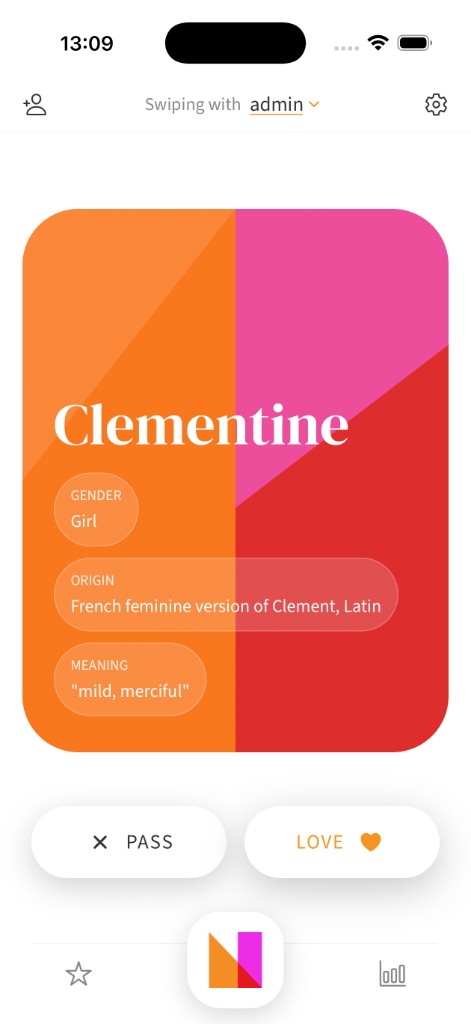
Find your perfect baby name together in our app, now available on the App Store and Google Play.
- Swipe through thousands of names with your partner
- Names you match on are saved to your shared list
- Get personalized recommendations that learn based on your and your partner's preferences
- Partner with friends and family to find names you all love
- Backed by Nameberry's 20 years of data around name preferences.