
International Variations of William


Classic William has been well used throughout the years.
There are many handsome forms of William used internationally, such as French Guillermo, German Wilhelm, Hungarian Vilmo, and Welsh Gwylym.
Here is our full list of international variations of William, ordered by their current popularity on Nameberry.
RELATED:
- Liam
Origin:
Irish short form of WilliamMeaning:
"resolute protection"Description:
Liam is the top boys' name in the US, holding the Number One spot for the past eight years and also ranking as one of the most popular boys' names around the western world.
- Wolf
Origin:
Animal name or diminutive of Wolfgang, GermanMeaning:
" traveling wolf"Description:
Wolf is a name with a split personality. It can be seen as one of the fierce animal names, like Fox and Bear and Puma, with a touch of the werewolf, or it can be viewed as a quieter, Wolf Blitzer kind of name, fairly common in German (where is pronounced Vulf) and Jewish families, sometimes as a short form of Wolfgang, or even Wolfram or Wolfhart.
- Guillermo
Origin:
Spanish variation of WilliamDescription:
As with Guillaume (see above), Liam, Willem, and Wilhelm, everyday Williams in their own countries, Guillermo is a captivating possibility here. Giermo, Gigermo, Gijermo, Gillermo, Gillirmo, Giyermo, Guermillo, Guiermo Guilermón, Guille, Guillelmo, Guillermino, Guillo, Guirmo, Gullermo, Llermo, Memo, Quillermo.
- Willem
Origin:
Dutch variation of WilliamMeaning:
"resolute protector"Description:
Common in Holland, the appealing Willem (as in de Kooning and Dafoe) makes William fresh and distinctive.
- Willem
Origin:
Dutch variation of WilliamMeaning:
"resolute protector"Description:
Common in Holland, the appealing Willem (as in de Kooning and Dafoe) makes William fresh and distinctive.
- Guillaume
Origin:
French variation of William, GermanMeaning:
"resolute protection"Description:
An everyday name in France, a charismatic possibility elsewhere, Guillaume is a French form of the classic Germanic William. It's heyday was back in the 1980s and 90s, when it ranked in the French Top 10 and the Belgium and Quebec Top 20, though more recent years have seen it drop from the popularity charts.
- Wilhelm
Origin:
German variation of WilliamMeaning:
"resolute protection"Description:
This dignified German form of William belonged to two German Emperors and Kings of Prussia, as well as a host of other important historical figures. These include composer (Wilhelm) Richard Wagner, philosophers Georg Wilhelm Friedrich Hegel and Friedrich Wilhelm Nietzsche, mathematician Gottfried Wilhelm von Leibniz, and physicist Wilhelm Roentgen, who discovered the X-ray. It now sounds rather dated in Germany, however, having dropped out of the Top 20 there in the late 1920s and continuing to decline since.
- Vilmo
Description:
Vilmo is a masculine name with Finnish and Hungarian roots, functioning as a variant of the more common Vilmos or Vilhelm. These names derive from the Germanic Wilhelm, composed of elements meaning 'will, desire' and 'helmet, protection.' Vilmo carries a distinctly European feel with its characteristic 'o' ending, which is common in Finnish masculine names. Though relatively uncommon in English-speaking countries, it enjoys moderate usage in its countries of origin. The name conveys strength and determination while maintaining a friendly, approachable quality. For parents seeking a distinctive international name with historical roots but a modern feel, Vilmo offers an appealing option.
- Vilem
Description:
Vilem is a masculine name of Czech and Slovak origin, equivalent to the English William and German Wilhelm. It derives from Germanic elements 'wil' (will, desire) and 'helm' (helmet, protection), thus meaning 'determined protector' or 'resolute guardian.' Popular throughout the Czech Republic and Slovakia, Vilem carries a strong cultural identity while maintaining international recognition through its connection to the William name family. The name has been borne by notable figures in Czech history and literature, including the poet Vilem Mrštík. With its distinctive sound and spelling, yet familiar roots, Vilem offers parents a name that stands out while still connecting to a widely recognized naming tradition across European cultures.
- Gigermo
Description:
Gigermo is an uncommon masculine name with uncertain origins. It may be a variant spelling of Guillermo, the Spanish form of William, which derives from the Germanic elements 'wil' meaning 'will, desire' and 'helm' meaning 'helmet, protection.' As a rare variation, Gigermo lacks significant historical documentation or widespread usage in most cultures. The name might also represent a unique creation or adaptation from a local dialect. Due to its rarity, there are few notable bearers of this name, and it does not appear in most popularity rankings worldwide. Its distinctive sound pattern gives it a memorable quality for parents seeking a highly uncommon name.
- Vilko
Description:
Vilko is a masculine name with Slavic origins, particularly common in Croatian, Slovenian, and other South Slavic languages. The name derives from Slavic elements meaning 'wolf' or 'wolf-like,' reflecting the animal's importance in Slavic folklore and mythology where wolves represent strength, loyalty, and protection. Compact yet distinctive, Vilko carries a powerful natural symbolism within its two syllables. This name connects its bearer to Slavic heritage while working well across cultural boundaries due to its pronounceability. Though uncommon in English-speaking countries, Vilko represents an accessible option for parents seeking names with Eastern European roots or animal associations. The wolf symbolism gives the name a wild, untamed quality balanced by its approachable sound pattern.
- Gwilym
Origin:
Welsh variation of WilliamMeaning:
"resolute protection"Description:
The Welsh version of William is almost unheard-of across, but it's fairly straightforward and could make a good heritage choice or alternative honor name.
- Guglielmo
Origin:
Italian variation of WilliamDescription:
William is a stylish classic right now, and while translating many classic names into Italian makes them instantly cooler and more attractive, this is one exception: Guglielmo presents pronunciation problems for the English speaker, suggesting the less-than-cool word "googley" followed by the even-less-cool-than-that Elmo.
- Vili
Description:
Vili is a masculine name with deep roots in Norse mythology, where Vili was one of three brothers (along with Odin and Vé) who created the world. The name derives from Old Norse elements meaning 'will' or 'desire,' reflecting determination and purpose. Common in Nordic countries, particularly Finland and Iceland, Vili offers a short, distinctive alternative to more elaborate Norse names. Its brevity makes it easily pronounceable across cultures while maintaining its Nordic character. In Finnish culture, the name has maintained steady usage throughout the years. Vili projects qualities of creativity, leadership, and primal strength through its mythological connections. Its simple two-syllable structure gives it a modern feel despite its ancient origins.
- Vila
Description:
Vila is a masculine name with diverse origins across multiple cultures. In Slavic mythology, Vila refers to fairy-like creatures or nymphs that inhabit the wilderness. The name may also derive from Latin 'villa,' meaning 'country house' or 'estate.' In some South Slavic languages, Vila can mean 'fairy' or 'enchantress,' though when used as a masculine name it takes on different cultural contexts. The name remains relatively uncommon internationally but appears in various European countries, particularly those with Slavic heritage. Vila has a melodic quality with its short, flowing pronunciation, making it distinctive yet accessible. The name's brevity gives it a modern feel despite its traditional roots, appealing to parents seeking a unique name with mythological or nature-inspired connections.
- Vilppu
Description:
Vilppu is a masculine Finnish name with historical roots in Finland's naming tradition. Derived as a Finnish variation of the name William or Wilhelm, which has Germanic origins meaning 'resolute protector' or 'determined guardian.' This distinctively Finnish adaptation carries the strength and dependability of its source while expressing Finnish linguistic patterns. Uncommon outside Finland and Finnish communities, Vilppu represents cultural heritage and linguistic distinctiveness. Traditional in character, the name has maintained modest usage in Finland throughout generations rather than following dramatic popularity trends. The double 'p' gives the name a strong, distinctive sound characteristic of Finnish phonology. Vilppu appeals particularly to those with Finnish heritage or parents seeking an authentically Nordic name with historical depth.
- Welfel
Description:
Welfel is an unusual masculine name with Germanic linguistic roots. This rare surname-turned-given-name likely derives from old German occupational terms, possibly related to weaving or wool-working trades. The name carries a distinctive sound that sets it apart from more common Germanic names. Welfel has remained extremely uncommon as a first name throughout history, with very limited documentation of its use. This rarity gives it a certain exclusivity for the few who bear it. The name possesses a sturdy, traditional quality in its consonant structure while maintaining an air of mystery due to its obscurity. Parents might choose Welfel seeking a truly unique name with European heritage, though they should be prepared to frequently explain and spell it.
- Viljami
Description:
Viljami is a masculine Finnish name that serves as the Finnish form of William. It derives from Germanic elements 'wil' meaning 'will' or 'desire' and 'helm' meaning 'helmet' or 'protection,' together signifying 'resolute protector' or 'determined guardian.' In Finland, Viljami is a well-established traditional name that has maintained steady popularity. The name has a melodic quality with its flowing syllables and carries a distinctly Nordic character while remaining accessible to speakers of other languages. Common nicknames include Vili or Ville. Outside Finland and Scandinavian communities, Viljami remains relatively uncommon, giving it an exotic appeal while still connecting to the familiar classic William. Parents might choose this name for its Finnish cultural heritage, pleasing sound, and strong underlying meaning.
- Vilek
Description:
Vilek is a rare masculine name with possible Slavic or Eastern European origins. In Czech and Slovak languages, names with the suffix '-ek' often indicate a diminutive or affectionate form, suggesting Vilek might be derived from names like Vilém (the Czech form of William) or related to 'vil' elements in Slavic languages. The name carries a strong, distinctive sound that's concise yet memorable. Despite its brevity, Vilek projects strength and individuality. The name remains uncommon in English-speaking countries, making it appealing to parents seeking truly distinctive options. Its short, straightforward pronunciation and spelling give it practical advantages while still maintaining an exotic, international quality that stands out in most communities.
- Giermo
Description:
Giermo is a masculine name of uncertain origin, possibly a variant of Guillermo, the Spanish form of William, which means "resolute protector" or "determined guardian." The variation gives the traditional name a distinctive twist while maintaining its strong masculine qualities. Giermo is quite rare, making it an uncommon choice for parents seeking a distinctive name with possible Romance language connections. It carries a melodic quality with its flowing vowels and strong consonants. While not widely used in any specific culture, the name's similarity to forms of William gives it a sense of familiarity despite its uniqueness. Its uncommon status makes it appealing to those wanting to honor William-based family names while choosing something more distinctive.
The Nameberry App Is Live
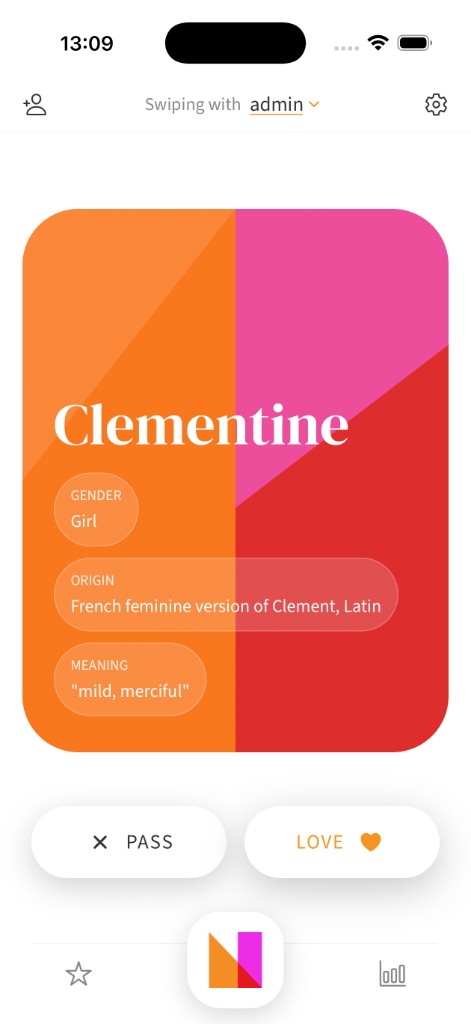
- Swipe through thousands of names with your partner
- Names you match on are saved to your shared list
- Get personalized recommendations that learn based on your and your partner's preferences
- Partner with friends and family to find names you all love
- Backed by Nameberry's 20 years of data around name preferences.