International Variations of Stephen


Classic Stephen, as well as the alternate spelling Steven, have been well used throughout the years.
There are several handsome forms of Stephen used internationally, such as cross-European Stefan, Spanish Esteban, Maori Tipene, and Russian Stenya.
Here is our full list of international variations of Stephen, ordered by their current popularity on Nameberry.
RELATED:
- Stephen
Origin:
GreekMeaning:
"garland, crown"Description:
Stephen, also spelled Steven, is a strong and likable classic, with the he's-a-great-guy short form Steve. Though not as well-used or fashionable as it was in its heyday -- it was a Top 25 name from 1946 to 1957 -- it's still a widely used name. It remains an even more popular in Ireland.
- Stefan
Origin:
German, Scandinavian, Polish, and Russian variation of StephenDescription:
An elegant, continental name for the post-Steve era. It debuted on the US Top 1000 in 1949 and has been on the list every year since except for a year off in 2008.
- Stefan
Origin:
German, Scandinavian, Polish, and Russian variation of StephenDescription:
An elegant, continental name for the post-Steve era. It debuted on the US Top 1000 in 1949 and has been on the list every year since except for a year off in 2008.
- Stefan
Origin:
German, Scandinavian, Polish, and Russian variation of StephenDescription:
An elegant, continental name for the post-Steve era. It debuted on the US Top 1000 in 1949 and has been on the list every year since except for a year off in 2008.
- Stefan
Origin:
German, Scandinavian, Polish, and Russian variation of StephenDescription:
An elegant, continental name for the post-Steve era. It debuted on the US Top 1000 in 1949 and has been on the list every year since except for a year off in 2008.
- Étienne
Origin:
French variation of Stephen, GreekMeaning:
"garland, crown"Description:
Appealingly gentle and romantic French classic--with a lot more charm than Steve.
- Stiofan
Description:
Stiofan is the traditional Irish Gaelic form of Stephen, with origins in the Greek name Stephanos meaning 'crown' or 'garland.' Pronounced approximately as 'SHTEE-fawn,' it represents the authentic Irish rendering of this classic name. Stiofan carries deep historical significance in Irish culture and maintains connections to the broader European tradition of Stephen names. While much less common than the anglicized Stephen or Steven, Stiofan has seen some revival among families celebrating Irish heritage and seeking authentic Gaelic names. The name combines ancient roots with distinctive pronunciation, appealing to parents who value traditional Celtic naming patterns.
- Stavros
Origin:
GreekMeaning:
"cross"Description:
A name that conjures up billionaire shipping magnates like, for instance, Stavros Niarcos.
- Stefano
Origin:
Italian variation of StephenMeaning:
"garland, crown"Description:
As commonly heard in Rome, Italy, as Steve is in Rome, New York. With the accent on the first syllable, Stefano has a lot of charm.
- Estevão
Description:
Estevão is the Portuguese form of Stephen, derived from the Greek name Stephanos, meaning "crown" or "garland." It carries the connotation of honor and victory, as crowns were traditionally awarded to winners. In Portugal and Brazil, Estevão has maintained steady popularity over centuries, particularly among Catholic families due to its connection to Saint Stephen, the first Christian martyr. The name combines historical significance with a melodic sound that flows naturally in Portuguese-speaking countries. The pronunciation (esh-te-VOUN) distinguishes it from other international variants of Stephen, giving it a distinct cultural identity while maintaining its noble heritage.
- Szczepan
Description:
Szczepan is a masculine Polish name equivalent to the English Stephen. Derived from the Greek name Stephanos meaning "crown" or "garland," it has deep historical roots in Poland. The distinctive combination of consonants in Szczepan showcases the characteristic Polish orthography, with "szcz" creating a sound unfamiliar to many English speakers. Despite its challenging appearance to non-Polish readers, the name has a melodious pronunciation in its native context. Szczepan has strong connections to Polish cultural heritage and Catholic tradition, as Saint Stephen was the first Christian martyr. While common in Poland, it remains rare internationally, making it a strong marker of Polish identity for those who bear it abroad.
- Stiana
Description:
Stiana is an uncommon masculine name with Scandinavian origins. It likely developed as a masculine variant of the feminine name Stina, which itself is a Nordic diminutive form of Christina or Kristina. The name carries connotations of strength and endurance, reflecting its Nordic heritage. Stiana remains quite rare internationally, with very limited usage outside of Scandinavian countries and their diaspora communities. The name might appeal to parents seeking a distinctive masculine name with subtle religious undertones, as its root connects to the meaning "follower of Christ." Its unusual quality makes it a conversation starter while still being relatively straightforward to pronounce.
- Isti
Description:
Isti is a compact masculine name with multiple possible origins. In Hungarian tradition, it functions as a diminutive form of István (Stephen), carrying warm, familiar connotations. Alternatively, it may derive from Native American Cherokee language, where it relates to words meaning "clear" or "distinct." In Indonesian languages, similar forms can mean "special" or "exceptional." The name's brevity gives it a modern, minimalist appeal while its varied cultural connections make it versatile for multicultural families. Isti is pronounced with two syllables (ISS-tee) in most traditions. Though uncommon in global usage statistics, the name's simplicity makes it accessible across language barriers while still offering distinctiveness and character for those who bear it.
- Esteve
Description:
Esteve is a masculine name of Catalan origin, being the Catalan equivalent of Stephen or Steven. Derived from the Greek name Stephanos (Στέφανος), it means "crown" or "garland." Predominantly used in Catalonia, Spain, and in some regions of France near the Spanish border, Esteve carries the historical weight of its connection to Saint Stephen, the first Christian martyr. The name has remained moderately popular in Catalan-speaking regions, appreciated for its cultural authenticity and traditional resonance. Esteve has a dignified, classic quality while maintaining a distinctive regional identity. Its pronunciation (es-TE-ve) gives it a melodic quality that distinguishes it from other European variants of Stephen.
- Stiabhan
Description:
Stiabhan is a masculine name that represents the Scottish Gaelic form of Stephen. Derived from the Greek 'Stephanos' meaning 'crown' or 'garland,' this traditional Celtic variation maintains the honorable meaning while featuring distinctive Gaelic spelling conventions. The pronunciation is similar to 'SHTEEV-ahn,' though regional variations exist. While uncommon outside Scottish Gaelic-speaking communities, Stiabhan represents a heritage choice that connects a child to Celtic linguistic traditions. The name carries the historical significance of Stephen, including its biblical connections to the first Christian martyr, while distinctly expressing Scottish cultural identity. For families with Scottish roots, Stiabhan offers an authentic alternative to the more common Stephen or Steven.
- Staffan
Description:
Staffan is the Swedish and Finnish variant of Stephen, a name derived from the Greek 'Stephanos' meaning 'crown' or 'garland.' In Scandinavian countries, Staffan is particularly associated with St. Stephen's Day celebrations and the traditional 'Staffan Stalledräng' (Stephen Stable Boy) songs and customs related to the winter solstice and Christmas. The name has been consistently used in Sweden and Swedish-speaking parts of Finland for centuries. While not among the most popular Nordic names internationally, Staffan carries cultural significance in its regions of origin. It has a strong, straightforward sound that translates well across languages while maintaining its distinctive Scandinavian character.
- Stepan
Description:
Stepan is the Slavic variation of Stephen, a name with ancient Greek origins meaning 'crown' or 'garland.' Particularly popular in Russia, Ukraine, Czech Republic, Slovakia, and other Eastern European countries, Stepan maintains strong cultural connections to Slavic heritage. The name has been borne by numerous notable figures throughout history, including writers, athletes, and political figures from Eastern Europe. Pronounced 'STEP-ahn,' it offers a distinctive alternative to the more common Western variants Stephen or Steven. While maintaining its traditional usage in Slavic countries, it has gained some international recognition as parents seek out names with authentic cultural roots. Stepan projects strength and dignity while honoring Eastern European heritage.
- Stepan
Description:
Stepan is the Slavic variation of Stephen, a name with ancient Greek origins meaning 'crown' or 'garland.' Particularly popular in Russia, Ukraine, Czech Republic, Slovakia, and other Eastern European countries, Stepan maintains strong cultural connections to Slavic heritage. The name has been borne by numerous notable figures throughout history, including writers, athletes, and political figures from Eastern Europe. Pronounced 'STEP-ahn,' it offers a distinctive alternative to the more common Western variants Stephen or Steven. While maintaining its traditional usage in Slavic countries, it has gained some international recognition as parents seek out names with authentic cultural roots. Stepan projects strength and dignity while honoring Eastern European heritage.
- Kiwini
Description:
Kiwini is a masculine name with likely Polynesian origins, particularly associated with Hawaiian naming traditions. While not among the most common Hawaiian names, it reflects the melodic quality and vowel patterns typical of names from Pacific Island cultures. In Hawaiian contexts, name meanings often connect to nature, family qualities, or circumstances of birth, though specific translations can vary. Kiwini has a rhythmic, flowing quality with its alternating consonants and vowels. The name remains quite rare outside of Pacific Islander communities, making it a distinctive choice that carries cultural associations with Hawaii and Polynesian heritage. Its musical sound and exotic feel might appeal to parents seeking a name connected to Pacific island cultures or those drawn to names with a melodic, distinctive quality.
- Istvan
Origin:
HungarianMeaning:
"crown, wreath"Description:
Hungarian form of Stephen, and the name of the first king and patron saint of Hungary.
The Nameberry App Is Live
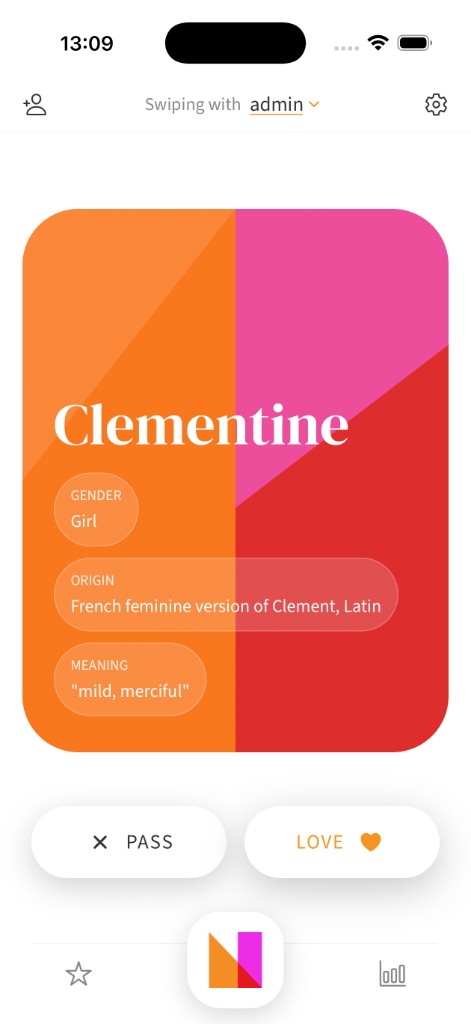
- Swipe through thousands of names with your partner
- Names you match on are saved to your shared list
- Get personalized recommendations that learn based on your and your partner's preferences
- Partner with friends and family to find names you all love
- Backed by Nameberry's 20 years of data around name preferences.