47 Variations of Peter

- Peter
Origin:
GreekMeaning:
"rock, stone"Description:
Peter is derived from the Greek Petros, meaning "rock" or "stone." One of the most important figures in the Christian hagiography is Saint Peter, keeper of the Gates of Heaven. Born Simon bar Jonah, he was given the nickname Peter by Jesus, to signify that he would be the rock on which Christ would build Christianity. Centuries later, there was Peter the Great, the czar who developed Russia as a major European power.
- Pierre
Origin:
French variation of PeterMeaning:
"rock, stone"Description:
One of the most familiar — if not stereotypical — Gallic names. Pierre was a Top 5 name in France from the 19th century through 1940 and is now on a steady decline in its native land. In the US, Pierre was most common in the 1980s but it has never cracked the Top 300.
- Pedro
Origin:
Spanish; Portuguese variation of Peter, GreekMeaning:
"rock, stone"Description:
Pedro is one of the most familiar Spanish names for boys, via baseball star Pedro Rodriguez and many others.
- Piero
Origin:
Italian, variation of PeterMeaning:
"rock"Description:
Piero is elegant, melodic, appealing. Just picture the muted frescoes of Renaissance artist Piero della Francesca.
- Pere
Description:
Pere is a masculine name with multiple cultural origins. In Catalan and French contexts, it derives from the Latin 'Petrus' meaning 'rock' or 'stone' (the equivalent of Peter). In Basque and other cultures, it has independent meanings relating to 'pear' or 'fruit.' With its simple two-syllable structure, Pere carries a timeless quality that works well across cultures. Though uncommon in English-speaking countries, it has maintained steady usage in parts of Europe, particularly in Spain's Catalonia region. The name's brevity gives it a modern feel despite its ancient origins, and its cross-cultural presence makes it an interesting choice for families with European connections or those seeking a simple yet distinctive name.
- Pehr
Description:
Pehr is a masculine name of Scandinavian origin, primarily found in Sweden. It represents a traditional Nordic variation of Peter, which derives from the Greek Petros, meaning 'rock' or 'stone.' This spelling variant has deep historical roots in Sweden, dating back several centuries. While maintaining modest usage in Scandinavian countries, Pehr remains relatively uncommon in the global context. The name carries a strong cultural connection to Nordic heritage and conveys a sense of solidity and reliability, much like its etymological meaning. The distinctive spelling offers a direct link to Scandinavian ancestry while still being recognizable to those familiar with the more common Peter.
- Petrini
Description:
A Greek way to say Peter.
- Per
Origin:
Scandinavian variation of PeterDescription:
So simple, yet so unique: a prime candidate for export. Pronunciation is like the English pair or pear.
- Per
Origin:
Scandinavian variation of PeterDescription:
So simple, yet so unique: a prime candidate for export. Pronunciation is like the English pair or pear.
- Petteri
Description:
Petteri is a masculine Finnish name derived from Peter, which ultimately comes from the Greek 'Petros' meaning 'rock' or 'stone.' This Finnish variation maintains the strong meaning while adding a distinctive Nordic flavor. In Finland, Petteri has been consistently popular, especially during the latter half of the 20th century. The name is celebrated in Finnish culture, notably in the Christmas carol 'Tip-tap,' which features Petteri the reindeer (Finland's version of Rudolph). Outside Finland and other Nordic countries, Petteri remains relatively uncommon, giving it an exotic quality while still being reasonably easy to pronounce for English speakers. The name carries a friendly, approachable sound with its rhythmic three syllables and soft ending, balancing masculine strength with melodic appeal.
- Pietro
Origin:
Italian variation of Peter, GreekMeaning:
"rock, stone"Description:
Yet another winning international form of Peter.
- Bedros
Description:
Bedros is an Armenian masculine name derived from the Greek name Petros, which means 'rock' or 'stone.' It is the Armenian variation of Peter, carrying the same biblical significance as it refers to the apostle Peter, whom Jesus called the rock upon which he would build his church. Popular throughout Armenia and Armenian diaspora communities, Bedros has remained a traditional choice that honors Armenian heritage while connecting to broader Christian traditions. The name often symbolizes strength, reliability, and steadfastness. While primarily used in Armenian families, it has spread to other cultures through migration and cultural exchange.
- Pietr
Description:
Pietr is a masculine name of Slavic and Eastern European origin, representing a variant form of Peter. The name derives from the Greek 'Petros', meaning 'rock' or 'stone', symbolizing strength and steadfastness. This variation is primarily found in Polish, Czech, and other Slavic languages, though spelling may vary slightly between cultures (Piotr in Polish, for example). Pietr carries the distinguished history of its root name—Peter being one of Christianity's most important apostles—while offering a distinctive Eastern European flair. Though not widely used in English-speaking countries, it provides an intriguing alternative for parents seeking a name with both biblical connections and Slavic heritage. Its short, strong sound combines tradition with a touch of international sophistication.
- Petros
Origin:
Greek and Armenian variation of PeterMeaning:
"stone"Description:
A form of the Biblical classic, in Greek, the first syllable is emphasized, whereas in Armenian, the second is stressed. Notable bearers are Greek tennis player Petros Tsitsipas and footballer Petros Mantalos, while historically, Petros Bereketis and Petros Byzantios were Greek-Ottoman musicians.
- Petr
Description:
Petr is the Czech, Slovak, and Eastern European variant of Peter, derived from the Greek 'Petros' meaning 'rock' or 'stone.' This masculine name carries significant historical and cultural weight throughout Eastern Europe, particularly in the Czech Republic and surrounding regions. While maintaining the same essential meaning and roots as the more familiar Peter, Petr has a distinctive Slavic character with its concise spelling and pronunciation. The name has remained consistently popular in Eastern European countries for centuries, connected to numerous notable historical figures, artists, and athletes from these regions. Petr combines strength and reliability in its meaning with a certain international sophistication. For families with Czech, Slovak or Eastern European heritage, Petr offers a way to honor cultural roots while using a name that remains pronounceable in many countries.
- Piet
Origin:
Dutch, diminutive of Pieter or Peter, GreekMeaning:
"rock"Description:
Wonderful nickname name most often associated in this country with Dutch modernist painter Mondrian. Pronounced PEET.
- Petter
Description:
Petter is a masculine name of Scandinavian origin, serving as the Nordic variation of Peter, which derives from the Greek 'Petros' meaning 'rock' or 'stone.' Common in Sweden, Norway, and other Nordic countries, Petter carries the same biblical connections as Peter, who was one of Jesus's apostles. The double 't' spelling reflects Scandinavian phonetic patterns and distinguishes it from the more international Peter. While maintaining steady popularity in Northern Europe, it remains relatively uncommon in English-speaking countries, giving it an exotic yet familiar quality for international use. Petter conveys strength and reliability through both its meaning and sound, offering a distinctive alternative to the more widely used Peter.
- Petter
Description:
Petter is a masculine name of Scandinavian origin, serving as the Nordic variation of Peter, which derives from the Greek 'Petros' meaning 'rock' or 'stone.' Common in Sweden, Norway, and other Nordic countries, Petter carries the same biblical connections as Peter, who was one of Jesus's apostles. The double 't' spelling reflects Scandinavian phonetic patterns and distinguishes it from the more international Peter. While maintaining steady popularity in Northern Europe, it remains relatively uncommon in English-speaking countries, giving it an exotic yet familiar quality for international use. Petter conveys strength and reliability through both its meaning and sound, offering a distinctive alternative to the more widely used Peter.
- Petrik
Description:
Petrik is a masculine name with Slavic origins, primarily used in Slovak, Czech, and other Eastern European cultures. It functions as a diminutive form of Peter, which derives from the Greek 'Petros' meaning 'stone' or 'rock.' The suffix '-ik' in Slavic languages typically indicates affection or smallness. Petrik carries the strength and historical significance of Peter while adding a distinctive cultural flair. Though not widely used internationally, the name maintains consistent usage within its regions of origin. Petrik has a pleasantly rhythmic sound with its two-syllable structure. The name bridges traditional naming practices with a slightly less common alternative to the more universal Peter, offering families a way to honor heritage while giving their child a somewhat unique identity.
- Peder
Origin:
Scandinavian variation of PeterDescription:
Peder? You mean Peter? You'll have to do a lot of spelling and explaining of this one.
The Nameberry App Is Live
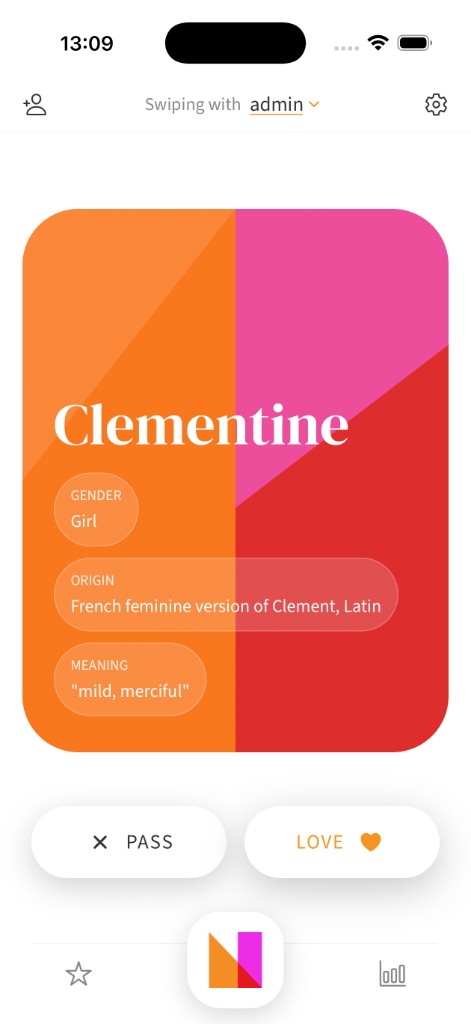
- Swipe through thousands of names with your partner
- Names you match on are saved to your shared list
- Get personalized recommendations that learn based on your and your partner's preferences
- Partner with friends and family to find names you all love
- Backed by Nameberry's 20 years of data around name preferences.